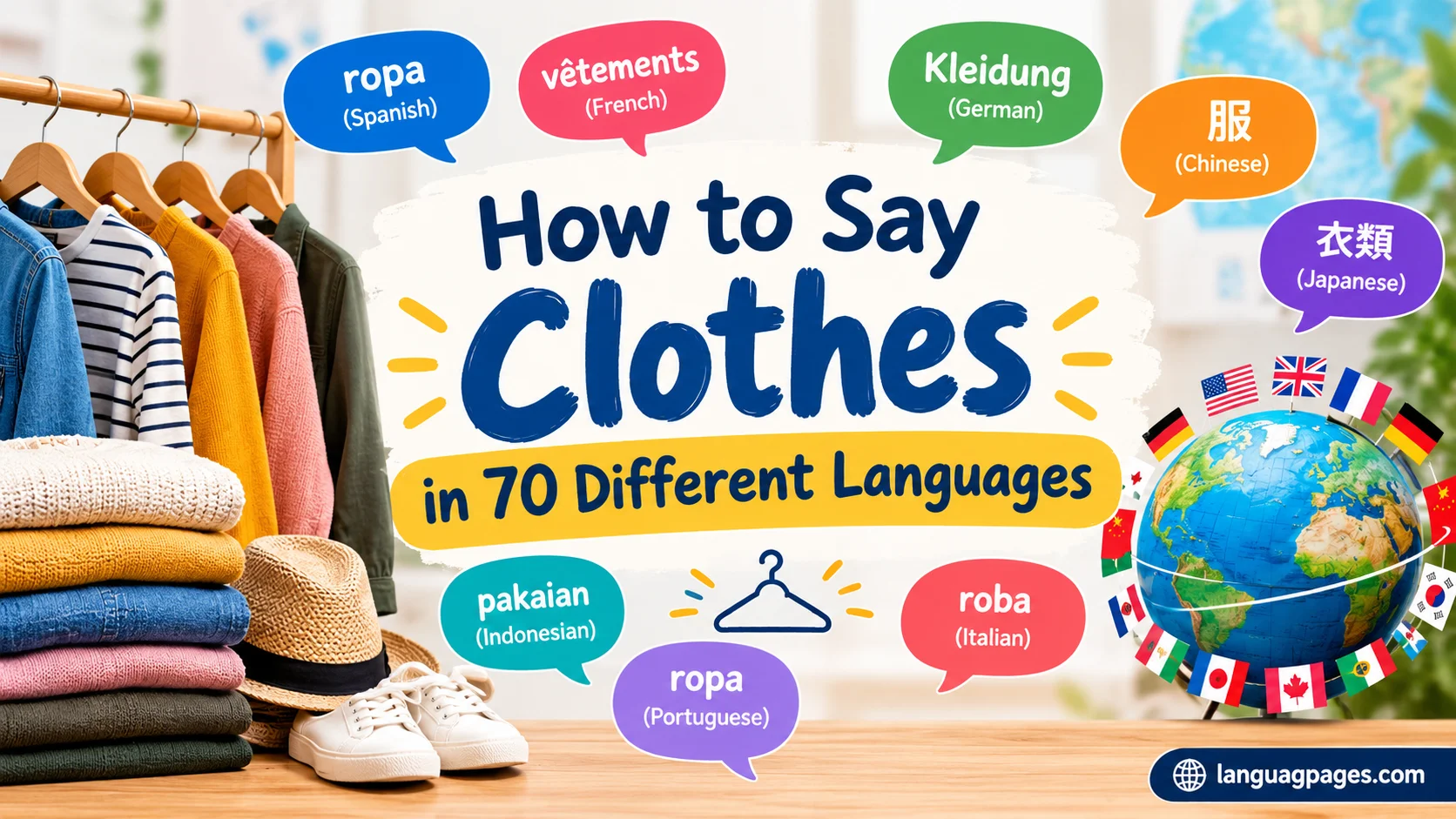
Clothes are more than everyday essentials; they help us express personal style, comfort, and identity. Learning how to say clothes in 70 different languages builds practical vocabulary and makes conversations about shopping, outfits, and travel easier.
Understanding clothing translations helps language learners communicate naturally in different countries. From foreign language vocabulary to pronunciation and sentence structure, each translation offers useful insight into how people describe everyday garments. Learning these words also improves language skills, supports international communication, and helps you recognize differences between formal expressions, regional terms, and common conversational phrases.
In this article, you’ll explore clothes in different languages, including their meanings, pronunciations, and practical example sentences. Discover translations across European, Asian, African, and Middle Eastern languages, while learning about regional variations, native scripts, and natural expressions. Whether you’re preparing for a trip, practicing vocabulary, or expanding your multilingual knowledge, these examples will help you understand how clothing words work in different languages and everyday situations.
Interesting Facts About Clothes
- Clothing words vary grammatically: English commonly uses “clothes” as a plural noun, but other languages may use singular or collective nouns.
- Clothes and clothing aren’t always interchangeable: English distinguishes between the everyday word “clothes” and the more general or formal term “clothing.”
- Regional vocabulary matters: Some languages have different everyday words for garments, outfits, and clothing as a whole.
- Writing systems differ: Mandarin Chinese, Japanese, Arabic, and other languages use writing systems that require different pronunciation guides.
- Loanwords influence vocabulary: Some languages use borrowed terms for particular garments, especially modern fashion items.
- Context changes the sentence: Saying “I need clothes” differs grammatically from asking “Where are the clothes?”
- Pronunciation deserves attention: Correct sounds and word stress can make clothing-related conversations easier to understand.
What Does Clothes Mean?
Clothes means the garments people wear on their bodies, such as shirts, trousers, dresses, jackets, and skirts. Clothes provide coverage and can also offer protection from weather.
The word can refer to a person’s everyday wardrobe, formal attire, or garments purchased for a particular occasion. For example, “I need warm clothes” refers to garments suitable for cold weather.
In English, clothes is generally plural. By contrast, “clothing” is usually an uncountable noun. Other languages may express the same idea using a singular noun, a collective term, or a plural form.
Why Can Clothes Have Different Translations?
The translation of clothes depends on several linguistic factors:
- Context: Clothing in general may require a different expression from a specific outfit.
- Grammar: Languages organize nouns differently, so the translation may be singular, plural, or collective.
- Formality: A word used in everyday conversation may differ from one found in formal writing.
- Region: Speakers of the same language may prefer different vocabulary in different countries.
- Pronunciation: A translation may contain unfamiliar sounds, tones, or stress patterns.
- Natural expression: A grammatically possible literal translation might not be the usual way to describe clothing.
The tables below use common words for clothes or clothing in general. Where a language has an important grammatical or regional distinction, a short note explains it.
European Languages
European languages come from several language families, including Germanic, Romance, and Slavic. Their clothing vocabulary reflects different grammatical systems and everyday speech patterns. The following translations refer broadly to garments or clothing.
| 🌍 Language | Country/Region | Translation | Pronunciation | Example Sentence |
| English | International | Clothes | klohz | I need new clothes. |
| American English 🇺🇸 | United States | Clothes | klohz | I bought new clothes. |
| British English 🇬🇧 | United Kingdom | Clothes | klohz | My clothes are ready. |
| Australian English 🇦🇺 | Australia | Clothes | klohz | I packed my clothes. |
| Spanish | Spain, Latin America | Ropa | ROH-pah | Necesito ropa nueva. — I need new clothes. |
| French | France, Belgium | Vêtements | vet-MAHN | J’achète des vêtements. — I’m buying clothes. |
| German | Germany, Austria | Kleidung | KLY-dung | Ich brauche Kleidung. — I need clothes. |
| Italian | Italy, Switzerland | Vestiti | ves-TEE-tee | Compro vestiti. — I’m buying clothes. |
| Portuguese | Portugal, Brazil | Roupas | HOH-pahs, approximately | Preciso de roupas. — I need clothes. |
| Dutch | Netherlands, Belgium | Kleding | KLAY-ding | Ik koop kleding. — I’m buying clothes. |
| Swedish | Sweden | Kläder | KLEH-der | Jag behöver kläder. — I need clothes. |
| Norwegian | Norway | Klær | klair | Jeg trenger klær. — I need clothes. |
| Danish | Denmark | Tøj | toy | Jeg køber tøj. — I’m buying clothes. |
| Finnish | Finland | Vaatteet | VAHT-teet | Tarvitsen vaatteita. — I need clothes. |
| Icelandic | Iceland | Föt | fuht | Ég þarf föt. — I need clothes. |
| Irish | Ireland | Éadaí | AY-dee | Tá éadaí nua agam. — I have new clothes. |
| Welsh | Wales | Dillad | DEE-thad | Mae angen dillad arnaf. — I need clothes. |
| Polish | Poland | Ubrania | oo-BRAH-nya | Potrzebuję ubrań. — I need clothes. |
| Czech | Czechia | Oblečení | ob-leh-CHEH-nee | Potřebuji oblečení. — I need clothes. |
| Slovak | Slovakia | Oblečenie | ob-leh-CHEH-nyeh | Potrebujem oblečenie. — I need clothes. |
| Ukrainian | Ukraine | Одяг | OH-dyah | Мені потрібен одяг. — I need clothes. |
| Russian | Russia, other communities | Одежда | ah-DYEZH-duh | Мне нужна одежда. — I need clothes. |
| Romanian | Romania, Moldova | Haine | HIGH-neh | Am nevoie de haine. — I need clothes. |
| Hungarian | Hungary | Ruhák | ROO-haak | Új ruhákra van szükségem. — I need new clothes. |
| Greek | Greece, Cyprus | Ρούχα | ROO-ha | Χρειάζομαι ρούχα. — I need clothes. |
| Bulgarian | Bulgaria | Дрехи | DREH-hee | Имам нужда от дрехи. — I need clothes. |
| Croatian | Croatia | Odjeća | OD-yeh-cha | Trebam novu odjeću. — I need new clothes. |
| Serbian | Serbia, Balkans | Одећа | oh-DEH-cha | Треба ми одећа. — I need clothes. |
| Slovenian | Slovenia | Oblačila | ob-lah-CHEE-lah | Potrebujem oblačila. — I need clothes. |
| Lithuanian | Lithuania | Drabužiai | drah-boo-ZHY-eye | Man reikia drabužių. — I need clothes. |
| Latvian | Latvia | Apģērbs | ap-GYEHRBS | Man vajag apģērbu. — I need clothes. |
| Estonian | Estonia | Riided | REE-dehd | Mul on riideid vaja. — I need clothes. |
English varieties
American, British, and Australian English all commonly use clothes. The spelling and basic meaning remain the same, although accents and some garment names vary. For example, Americans often say “pants,” while British speakers commonly use “trousers” for the same type of garment.
European cultural and language notes
Words such as Spanish ropa, German Kleidung, and Italian vestiti are not always identical in grammatical behavior. Learn each word in a complete sentence to understand how it works naturally.
Asian Languages
Asia contains many language families, including Sino-Tibetan, Indo-Aryan, Dravidian, Turkic, and Austronesian languages. Its writing systems range from Chinese characters to alphabets and syllabaries. Pronunciation guides below offer a starting point, but tones and unfamiliar sounds may require listening practice.
| 🌍 Language | Country/Region | Translation | Pronunciation | Example Sentence |
| Mandarin Chinese | China, Taiwan, Singapore | 衣服 | yīfu | 我需要新衣服。— I need new clothes. |
| Cantonese | Hong Kong, Guangdong | 衫褲 / 衣服 | saam1 fu3 / ji1 fuk6 | 我買咗新衫。— I bought new clothes. |
| Japanese | Japan | 服(ふく) | fuku | 新しい服が必要です。— I need new clothes. |
| Korean | Korea | 옷 | ot | 새 옷이 필요해요. — I need new clothes. |
| Hindi | India | कपड़े | kapṛe, roughly KUP-ray | मुझे नए कपड़े चाहिए। — I need new clothes. |
| Urdu | Pakistan, India | کپڑے | kapray | مجھے نئے کپڑے چاہییں۔ — I need new clothes. |
| Bengali | Bangladesh, India | পোশাক | poshak | আমার নতুন পোশাক দরকার। — I need new clothes. |
| Punjabi | Pakistan, India | ਕੱਪੜੇ / کپڑے | kapṛe | ਮੈਨੂੰ ਨਵੇਂ ਕੱਪੜੇ ਚਾਹੀਦੇ ਹਨ। — I need new clothes. |
| Gujarati | India | કપડાં | kapaḍā̃ | મને નવાં કપડાં જોઈએ. — I need new clothes. |
| Marathi | India | कपडे | kapaḍe | मला नवीन कपडे हवे आहेत. — I need new clothes. |
| Tamil | India, Sri Lanka | ஆடைகள் | āṭaikaḷ | எனக்குப் புதிய ஆடைகள் வேண்டும். — I need new clothes. |
| Telugu | India | బట్టలు | baṭṭalu | నాకు కొత్త బట్టలు కావాలి. — I need new clothes. |
| Kannada | India | ಬಟ್ಟೆಗಳು | baṭṭegaḷu | ನನಗೆ ಹೊಸ ಬಟ್ಟೆಗಳು ಬೇಕು. — I need new clothes. |
| Malayalam | India | വസ്ത്രങ്ങൾ | vastrangaḷ | എനിക്ക് പുതിയ വസ്ത്രങ്ങൾ വേണം. — I need new clothes. |
| Nepali | Nepal | लुगा | lugā | मलाई नयाँ लुगा चाहिन्छ। — I need new clothes. |
| Sinhala | Sri Lanka | ඇඳුම් | aඳum, approximately andum | මට අලුත් ඇඳුම් අවශ්යයි. — I need new clothes. |
| Thai | Thailand | เสื้อผ้า | sûea-phâa | ฉันต้องการเสื้อผ้าใหม่ — I need new clothes. |
| Vietnamese | Vietnam | Quần áo | kwuhn ow, approximate | Tôi cần quần áo mới. — I need new clothes. |
| Indonesian | Indonesia | Pakaian | pah-KAI-an | Saya membutuhkan pakaian baru. — I need new clothes. |
| Malay | Malaysia, Brunei | Pakaian | pah-KAI-an | Saya memerlukan pakaian baharu. — I need new clothes. |
| Filipino/Tagalog | Philippines | Damit | dah-MEET | Kailangan ko ng bagong damit. — I need new clothes. |
| Burmese | Myanmar | အဝတ်အစား | a-wut-a-sa, approximate | အဝတ်အစားအသစ်တွေ လိုတယ်။ — I need new clothes. |
| Khmer | Cambodia | សម្លៀកបំពាក់ | sam-liek-bom-peak, approximate | ខ្ញុំត្រូវការសម្លៀកបំពាក់ថ្មី។ — I need new clothes. |
| Lao | Laos | ເຄື່ອງນຸ່ງ | kheuang nung, approximate | ຂ້ອຍຕ້ອງການເຄື່ອງນຸ່ງໃໝ່. — I need new clothes. |
| Mongolian | Mongolia | Хувцас | khuvtsas | Надад шинэ хувцас хэрэгтэй. — I need new clothes. |
| Kazakh | Kazakhstan | Киім | kee-yim | Маған жаңа киім керек. — I need new clothes. |
| Uzbek | Uzbekistan | Kiyim | kee-yim | Menga yangi kiyim kerak. — I need new clothes. |
| Turkish | Türkiye | Giysi / kıyafet | gee-yee-see / kuh-yah-fet | Yeni kıyafetlere ihtiyacım var. — I need new clothes. |
Asian cultural and language notes
In Mandarin, 衣服 (yīfu) is a common everyday word for clothes. Japanese 服 (fuku) is similarly useful in ordinary conversation. In Turkish, giysi and kıyafet can both refer to clothing, with usage depending on context.
Punjabi is written in different scripts in different regions, including Shahmukhi in much of Pakistani Punjab and Gurmukhi in Indian Punjab. The script changes, but the language remains Punjabi.
Middle Eastern Languages
The Middle East includes Arabic, Persian, Hebrew, Kurdish, Turkish, and other distinct language traditions. Vocabulary and pronunciation can vary across communities, especially when comparing formal language with everyday regional speech.
| 🌍 Language | Country/Region | Translation | Pronunciation | Example Sentence |
| Arabic (Modern Standard Arabic) | Middle East, North Africa | ملابس | malābis | أحتاج إلى ملابس جديدة. — I need new clothes. |
| Persian (Farsi) | Iran | لباس | lebās | من به لباس جدید نیاز دارم. — I need new clothes. |
| Hebrew | Israel | בגדים | b’gadim | אני צריך בגדים חדשים. — I need new clothes. |
| Kurdish (Kurmanji) | Türkiye, Iraq, Syria, Iran | Cil û berg | jeel oo berg, approximate | Ez cil û bergên nû dixwazim. — I want new clothes. |
| Armenian | Armenia, diaspora communities | Հագուստ | hagust | Ինձ նոր հագուստ է պետք։ — I need new clothes. |
Middle Eastern cultural and language notes
Arabic has Modern Standard Arabic for formal communication and many regional dialects for everyday conversation. The word malābis is broadly understandable, but local phrasing can vary.
In Hebrew, the adjective may change according to grammatical gender. The example above uses a masculine speaker’s form of “need”; a feminine speaker would commonly say אני צריכה בגדים חדשים (ani tsrikha bgadim khadashim).
Other World Languages
Languages outside the regions above add further perspectives on clothing vocabulary. These examples include Indigenous languages, a creole language, and an internationally constructed language.
| 🌍 Language | Country/Region | Translation | Pronunciation | Example Sentence |
| Māori | New Zealand | Kākahu | KAA-kaa-hoo | E hiahia ana ahau ki ngā kākahu hou. — I want new clothes. |
| Samoan | Samoa, Pacific Islands | Laʻei | lah-EH-ee | Ou te manaʻomia ni laʻei fou. — I need new clothes. |
| Tongan | Tonga | Kofu | KOH-foo | ʻOku ou fiemaʻu ha kofu foʻou. — I need new clothes. |
| Hawaiian | Hawaiʻi | Lole | LOH-leh | Makemake au i nā lole hou. — I want new clothes. |
| Quechua | Andes, especially Peru and Bolivia | P’acha / p’achakuna, depending on variety | pah-cha / pah-cha-KOO-nah | Regional wording varies; verify with a local speaker. |
| Guarani | Paraguay, nearby regions | Ao | ah-oh | Aikotevẽ ao pyahu. — I need new clothes. |
| Haitian Creole | Haiti | Rad | rahd | Mwen bezwen rad nèf. — I need new clothes. |
| Esperanto | International constructed language | Vestoj | ves-TOY | Mi bezonas novajn vestojn. — I need new clothes. |
Note: Quechua has multiple varieties, and spelling and vocabulary differ across them. The word listed is not a universal form for every Quechua-speaking community; check the local variety before using it in a formal translation.
The full regional tables above contain additional languages and examples. This compact list is designed for quick vocabulary review.
How to Choose the Right Translation
Choosing the right word for clothes starts with understanding your situation.
- Consider the context: A general word for clothing may differ from the word used for a particular garment.
- Learn a complete phrase: Instead of memorizing a word alone, practice sentences such as “I need new clothes.”
- Check the region: Spanish and Arabic, for example, have regional varieties that influence everyday vocabulary.
- Match the level of formality: Words used in conversation may differ from expressions found in formal writing.
- Practice pronunciation: Pay attention to tones, stress, and sounds that don’t exist in English.
- Use reliable language resources: For an important message, check a reputable dictionary or ask a proficient speaker familiar with the relevant variety.
The most useful translation is the one that communicates your meaning naturally to the person you’re speaking with.
Common Mistakes When Translating Clothes
Several mistakes can make a clothing translation confusing.
- Translating word for word: English grammar doesn’t apply directly to every language.
- Ignoring singular and plural forms: A word that means clothing collectively may not behave like English “clothes.”
- Mixing regional varieties: Avoid combining vocabulary from different dialects without understanding the distinction.
- Overlooking pronunciation: A small change in sound or tone can affect understanding.
- Ignoring grammatical agreement: Some languages change adjectives or verbs depending on gender, number, or noun class.
- Assuming every word means exactly the same thing: A term for garments, an outfit, and clothing in general may have different uses.
Practical tip: Learn the translation, pronunciation, and one complete example sentence together. This makes it easier to remember how the word works in real conversation.
Why Learn Clothes in Different Languages?
Learning clothing vocabulary in other languages helps you handle everyday situations more confidently. You can ask for garments while shopping, understand labels, describe what you packed, and communicate your needs when traveling.
It also builds broader language-learning skills. Comparing words such as ropa, Kleidung, and nguo shows how languages organize familiar ideas in different ways. Learning the relevant writing system and pronunciation can also strengthen your vocabulary and listening skills.
For families, students, and travelers, these expressions provide a practical starting point for conversations. For anyone interested in culture, clothing vocabulary can open discussions about traditional garments, personal style, weather, and everyday life.
The goal isn’t to memorize every translation at once. Start with a few languages that interest you, practice useful sentences, and expand your vocabulary as you gain confidence.
FAQs:
How do you say clothes in different languages?
The word varies by language. Examples include ropa in Spanish, vêtements in French, Kleidung in German, 衣服 (yīfu) in Mandarin Chinese, and ملابس (malābis) in Arabic.
What is the most natural translation of clothes?
The most natural translation depends on the language and context. In Spanish, ropa is a common general term; in German, Kleidung is widely used for clothing.
Can the translation change by country?
Yes. Countries and regions may use different words, pronunciations, or expressions even when speakers share the same language.
Why do some languages have multiple translations?
A language may distinguish between clothing in general, individual garments, outfits, and formal attire. Different words can therefore be appropriate in different situations.
Does pronunciation change between regions?
Yes. Accents, local speech patterns, and dialects can affect pronunciation. Some languages also use tones or sounds that English speakers may find unfamiliar.
How can I pronounce clothes correctly in another language?
Start with the pronunciation guide, then listen to reliable recordings from speakers of the target language. Repeat the word in a complete sentence.
Is a literal translation always accurate?
No. A literal translation may be grammatically awkward or change the intended meaning. Natural translations account for context and target-language grammar.
Which languages use a different writing system?
Mandarin Chinese, Japanese, Korean, Hindi, Urdu, Arabic, Hebrew, Thai, and many others use writing systems different from the standard Latin alphabet.
Can I use these translations while shopping?
Yes. They are useful starting points for discussing clothes, although learning phrases such as “How much does this cost?” and “Do you have a larger size?” will make shopping easier.
How can learning clothing vocabulary help with language learning?
It builds everyday vocabulary, reinforces sentence structure, and helps you practice pronunciation in useful real-life situations.
Is clothing the same word as clothes?
Not exactly. In English, clothes generally refers to garments people wear, while clothing is often used as a broader or more formal collective noun.
Conclusion:
Learning how to say clothes in 70 different languages expands your vocabulary and helps you communicate confidently while shopping, traveling, and exploring different cultures around the world.
Understanding clothing translations, pronunciation, and regional differences makes language learning more practical and enjoyable. Practice these words in everyday sentences, respect cultural variations, and keep exploring new languages to build confidence and connect with people through meaningful communication.