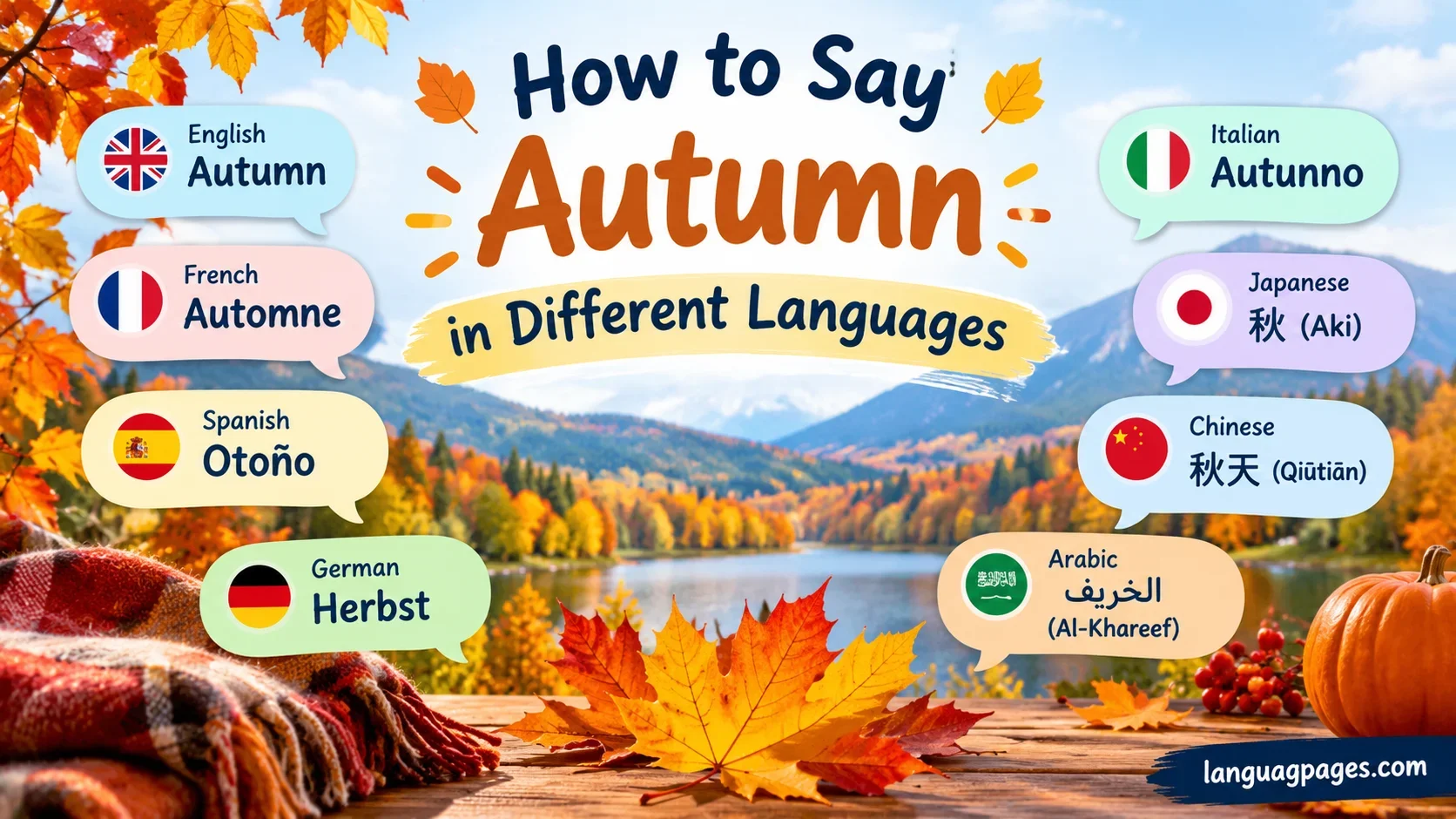
Have you noticed how a single season can carry different meanings across cultures? Autumn inspires images of colorful leaves, harvest traditions, cooler weather, and unique expressions in languages worldwide today.
This article explores how Autumn is expressed across different languages, highlighting translation, pronunciation, and cultural expression. You’ll discover how regional usage, local traditions, and language structures influence seasonal vocabulary, while improving your understanding of English usage, grammar, and communication in multilingual contexts globally.
You’ll also learn why context matters when translating seasonal terms, much like business communication, formal writing, project management, scheduling, calendar planning, meetings, online booking, and broadcasting. Brief references to US and UK preferences help ensure greater consistency, accuracy, and natural language understanding.
Interesting Facts About Autumn
- Autumn and fall are both common English terms for the same season.
- Some languages use words connected to harvest traditions.
- Seasonal names may reflect local climate rather than identical calendar dates.
- Southern Hemisphere countries experience autumn during different months than Northern Hemisphere countries.
- Certain languages have regional variants for seasonal vocabulary.
- Some cultures associate autumn with festivals, gratitude, or agricultural activities.
- The translation may stay the same while pronunciation changes between regions.
What Does Autumn Mean?
Autumn is the season between summer and winter. It is commonly associated with cooler temperatures, shorter days, changing leaf colors, and harvest activities. Depending on culture and geography, people may connect autumn with nature, family gatherings, seasonal foods, or preparation for winter.
Why Can Autumn Have Different Translations?
A phrase does not always translate perfectly between languages. Factors affecting translation include:
- Regional dialects
- Formality
- Local climate
- Historical language development
- Written versus spoken usage
- Cultural associations
- Literal versus natural translation
A direct word-for-word approach may not always produce the most natural result.
European Languages
Europe contains many language families, including Germanic, Romance, Slavic, Celtic, Baltic, and Uralic languages. Although the concept of autumn is widely recognized, pronunciation, spelling, and cultural associations vary considerably.
| 🌍 Language | Country/Region | Translation | Pronunciation | Example Sentence |
| American English 🇺🇸 | USA | Autumn/Fall | aw-tum, fawl | Fall colors are beautiful. |
| British English 🇬🇧 | UK | Autumn | aw-tum | Autumn is my favorite season. |
| Australian English 🇦🇺 | Australia | Autumn | aw-tum | Autumn weather is pleasant. |
| Spanish | Spain, Latin America | Otoño | oh-TOH-nyo | Me encanta el otoño. |
| French | France, Canada | Automne | oh-TON | J’aime l’automne. |
| German | Germany, Austria | Herbst | HERBST | Der Herbst ist schön. |
| Italian | Italy | Autunno | ow-TOON-no | Amo l’autunno. |
| Portuguese | Portugal, Brazil | Outono | oh-TOH-no | Gosto do outono. |
| Dutch | Netherlands | Herfst | HERFST | De herfst begint. |
| Swedish | Sweden | Höst | HURST | Hösten är vacker. |
| Norwegian | Norway | Høst | HURST | Høsten er fin. |
| Danish | Denmark | Efterår | EF-ter-or | Efteråret er køligt. |
| Finnish | Finland | Syksy | SUUK-su | Syksy on kaunis. |
| Icelandic | Iceland | Haust | HOYST | Haustið er komið. |
| Irish | Ireland | Fómhar | FOH-var | Is breá liom fómhar. |
| Welsh | Wales | Hydref | HUH-drev | Mae’r hydref yma. |
| Polish | Poland | Jesień | YEH-shen | Lubię jesień. |
| Czech | Czech Republic | Podzim | POD-zim | Podzim je krásný. |
| Slovak | Slovakia | Jeseň | YEH-sen | Jeseň je pekná. |
| Ukrainian | Ukraine | Осінь | Osin | Осінь гарна. |
| Russian | Russia | Осень | Osen | Осень прекрасна. |
| Romanian | Romania | Toamnă | TOAM-nuh | Îmi place toamna. |
| Hungarian | Hungary | Ősz | URS | Az ősz szép. |
| Greek | Greece | Φθινόπωρο | fthi-NO-po-ro | Λατρεύω το φθινόπωρο. |
| Bulgarian | Bulgaria | Есен | ES-en | Есента е хубава. |
| Croatian | Croatia | Jesen | YEH-sen | Volim jesen. |
| Serbian | Serbia | Јесен | YEH-sen | Волим јесен. |
| Slovenian | Slovenia | Jesen | YEH-sen | Jesen je lepa. |
| Lithuanian | Lithuania | Ruduo | ROO-doh | Ruduo gražus. |
| Latvian | Latvia | Rudens | ROO-dens | Rudens ir skaists. |
| Estonian | Estonia | Sügis | SUU-gis | Sügis on ilus. |
Cultural Note: In English-speaking regions, fall is common in North America, while autumn is generally preferred in Britain and many Commonwealth countries.
Asian Languages
Asia includes hundreds of languages, writing systems, and cultural traditions. Seasonal vocabulary often reflects local climate patterns and literary traditions.
| 🌍 Language | Country/Region | Translation | Pronunciation | Example Sentence |
| Mandarin Chinese | China, Taiwan | 秋天 | qiū tiān | 秋天很美。 |
| Cantonese | Hong Kong | 秋天 | cau1 tin1 | 秋天好靚。 |
| Japanese | Japan | 秋 | aki | 秋が好きです。 |
| Korean | Korea | 가을 | ga-eul | 가을이 아름답다. |
| Hindi | India | शरद ऋतु | sharad ritu | मुझे शरद ऋतु पसंद है। |
| Urdu | Pakistan | خزاں | khizaan | مجھے خزاں پسند ہے۔ |
| Bengali | Bangladesh, India | শরৎ | shorot | শরৎ সুন্দর। |
| Punjabi | India, Pakistan | خزاں/ਪਤਝੜ | khizaan/patjhar | پَتجھڑ خوبصورت ہے۔ |
| Gujarati | India | શરદ | sharad | શરદ સુંદર છે. |
| Marathi | India | शरद ऋतू | sharad ritu | शरद ऋतू सुंदर आहे. |
| Tamil | India, Sri Lanka | இலையுதிர் காலம் | ilaiyuthir kaalam | இலையுதிர் காலம் அழகு. |
| Telugu | India | శరదృతువు | sharad rutuvu | శరదృతువు అందంగా ఉంది. |
| Kannada | India | ಶರದೃತು | sharadritu | ಶರದೃತು ಸುಂದರವಾಗಿದೆ. |
| Malayalam | India | ശരത്കാലം | sharathkaalam | ശരത്കാലം മനോഹരം. |
| Nepali | Nepal | शरद ऋतु | sharad ritu | शरद ऋतु रमाइलो छ। |
| Sinhala | Sri Lanka | ශරත් කාලය | sharath kaalaya | ශරත් කාලය ලස්සනයි. |
| Thai | Thailand | ฤดูใบไม้ร่วง | rue-du bai-mai-ruang | ฤดูใบไม้ร่วงสวยงาม |
| Vietnamese | Vietnam | Mùa thu | moo-a thu | Tôi thích mùa thu. |
| Indonesian | Indonesia | Musim Gugur | moo-sim goo-gur | Musim gugur indah. |
| Malay | Malaysia | Musim Luruh | moo-sim loo-roh | Musim luruh nyaman. |
| Filipino | Philippines | Taglagas | tag-LA-gas | Maganda ang taglagas. |
| Burmese | Myanmar | ဆောင်းဦး | hsoung oo | ဆောင်းဦးလှသည်။ |
| Khmer | Cambodia | រដូវស្លឹកឈើជ្រុះ | ro-duv slek chheu chruh | រដូវនេះស្រស់ស្អាត។ |
| Lao | Laos | ລະດູໃບໄມ້ຫຼົ່ນ | la-du bai-mai lon | ລະດູນີ້ງາມ. |
| Mongolian | Mongolia | Намар | namar | Намар сайхан. |
| Kazakh | Kazakhstan | Күз | kuz | Күз әдемі. |
| Uzbek | Uzbekistan | Kuz | kuz | Kuz chiroyli. |
| Turkish | Türkiye | Sonbahar | son-ba-har | Sonbahar güzel. |
| Persian | Iran | پاییز | paeez | پاییز زیباست. |
Cultural Note: Several South Asian languages use forms related to Sharad, a traditional seasonal term found in classical literature.
African Languages
Africa is home to extraordinary linguistic diversity. Seasonal vocabulary may reflect local climate patterns that differ from the classic four-season model.
| 🌍 Language | Country/Region | Translation | Pronunciation | Example Sentence |
| Swahili | East Africa | Vuli | VOO-lee | Vuli ni nzuri. |
| Afrikaans | South Africa | Herfs | HERFS | Herfs is mooi. |
| Zulu | South Africa | Ikwindla | ee-KWIN-dla | Ikwindla lihle. |
| Xhosa | South Africa | Ukwindla | oo-KWIN-dla | Ukwindla kuhle. |
| Amharic | Ethiopia | መከር | meker | መከር ውብ ነው። |
| Yoruba | Nigeria | Igba Irẹdanu Ewe | eeg-ba | Igba yi dara. |
| Igbo | Nigeria | Oge mgbụsị akwụkwọ | oh-gay | Oge a mara mma. |
| Hausa | West Africa | Damina ta kaka | da-mee-na | Kaka tana da kyau. |
| Somali | Somalia | Dayr | dayr | Dayr waa qurux badan. |
| Shona | Zimbabwe | Matsutso | mat-SOO-tso | Matsutso akanaka. |
| Sesotho | Lesotho | Hoetla | hoo-ET-la | Hoetla ho monate. |
| Setswana | Botswana | Letlhafula | let-lha-FOO-la | Letlhafula le lentle. |
| Kinyarwanda | Rwanda | Impeshyi y’itumba | im-pe-shyi | Igihe cyiza. |
| Malagasy | Madagascar | Fararano | fa-ra-RA-no | Tiako ny fararano. |
Cultural Note: In some African regions, weather patterns are discussed more often through rainy and dry seasons than through the four-season model.
Middle Eastern Languages
The Middle East includes several major language traditions. Seasonal terms may differ between standard forms and local dialects.
| 🌍 Language | Country/Region | Translation | Pronunciation | Example Sentence |
| Modern Standard Arabic | Arab world | الخريف | al-khareef | الخريف جميل. |
| Hebrew | Israel | סתיו | stav | הסתיו יפה. |
| Kurdish (Kurmanji) | Türkiye, Iraq, Syria | Payîz | pa-yeez | Payîz xweşe. |
| Armenian | Armenia | Աշուն | ashun | Աշունը գեղեցիկ է։ |
| Persian | Iran | پاییز | paeez | پاییز زیباست. |
| Turkish | Türkiye | Sonbahar | son-ba-har | Sonbahar güzel. |
Cultural Note: Modern Standard Arabic is widely understood in writing, while local dialects may have pronunciation differences.
Other World Languages
| 🌍 Language | Country/Region | Translation | Pronunciation | Example Sentence |
| Māori | New Zealand | Ngahuru | nga-hoo-roo | He ataahua te ngahuru. |
| Samoan | Samoa | Tau mālūlū | tau ma-loo-loo | E matagofie le tau. |
| Tongan | Tonga | Fa‘ahita‘u fakatōlau | fa-ah-hee-tau | Oku lelei. |
| Hawaiian | Hawaii | Kau hāʻulelau | kow ha-oo-le-lau | Nani ke kau hāʻulelau. |
| Haitian Creole | Haiti | Otòn | oh-ton | Mwen renmen otòn. |
| Esperanto | International | Aŭtuno | ow-TOO-no | Mi ŝatas aŭtunon. |
| Quechua | Andes | Ruphay qhipa | roo-pai | Sumaqmi. |
| Guarani | Paraguay | Araro’y | a-ra-roy | Iporã araro’y. |
Quick Reference: Autumn in Different Languages
| Language | Translation |
| English | Autumn |
| Spanish | Otoño |
| French | Automne |
| German | Herbst |
| Italian | Autunno |
| Portuguese | Outono |
| Dutch | Herfst |
| Swedish | Höst |
| Norwegian | Høst |
| Danish | Efterår |
| Finnish | Syksy |
| Icelandic | Haust |
| Irish | Fómhar |
| Welsh | Hydref |
| Polish | Jesień |
| Czech | Podzim |
| Slovak | Jeseň |
| Ukrainian | Осінь |
| Russian | Осень |
| Romanian | Toamnă |
| Hungarian | Ősz |
| Greek | Φθινόπωρο |
| Bulgarian | Есен |
| Croatian | Jesen |
| Serbian | Јесен |
| Slovenian | Jesen |
| Lithuanian | Ruduo |
| Latvian | Rudens |
| Estonian | Sügis |
| Mandarin | 秋天 |
| Cantonese | 秋天 |
| Japanese | 秋 |
| Korean | 가을 |
| Hindi | शरद ऋतु |
| Urdu | خزاں |
| Bengali | শরৎ |
| Punjabi | ਪਤਝੜ |
| Gujarati | શરદ |
| Marathi | शरद ऋतू |
| Tamil | இலையுதிர் காலம் |
| Telugu | శరదృతువు |
| Kannada | ಶರದೃತು |
| Malayalam | ശരത്കാലം |
| Nepali | शरद ऋतु |
| Sinhala | ශරත් කාලය |
| Thai | ฤดูใบไม้ร่วง |
| Vietnamese | Mùa thu |
| Indonesian | Musim Gugur |
| Malay | Musim Luruh |
| Filipino | Taglagas |
| Burmese | ဆောင်းဦး |
| Khmer | រដូវស្លឹកឈើជ្រុះ |
| Lao | ລະດູໃບໄມ້ຫຼົ່ນ |
| Mongolian | Намар |
| Kazakh | Күз |
| Uzbek | Kuz |
| Turkish | Sonbahar |
| Persian | پاییز |
| Swahili | Vuli |
| Afrikaans | Herfs |
| Zulu | Ikwindla |
| Xhosa | Ukwindla |
| Amharic | መከር |
| Yoruba | Igba Irẹdanu Ewe |
| Igbo | Oge mgbụsị akwụkwọ |
| Hausa | Damina ta kaka |
| Somali | Dayr |
| Shona | Matsutso |
| Sesotho | Hoetla |
| Setswana | Letlhafula |
| Kinyarwanda | Impeshyi y’itumba |
| Malagasy | Fararano |
| Arabic | الخريف |
| Hebrew | סתיו |
| Kurdish | Payîz |
| Armenian | Աշուն |
| Māori | Ngahuru |
| Samoan | Tau mālūlū |
| Tongan | Fa‘ahita‘u fakatōlau |
| Hawaiian | Kau hāʻulelau |
| Haitian Creole | Otòn |
| Esperanto | Aŭtuno |
How to Choose the Right Translation
The best translation depends on context, region, audience, and whether communication is spoken or written. When learning a foreign language, it is helpful to understand both the standard form and any common regional alternatives. If you are traveling, local usage may sound more natural than a textbook translation.
Common Mistakes When Translating Autumn
- Using a strict word-for-word translation.
- Ignoring regional vocabulary differences.
- Assuming every language follows the same seasonal calendar.
- Mixing formal and informal forms.
- Using incorrect pronunciation.
- Assuming one translation works identically everywhere.
- Overlooking script and romanization differences.
Why Learn Autumn in Different Languages?
Learning Autumn in different languages helps expand vocabulary and improve cultural understanding. It can make travel conversations easier, support language-learning goals, and provide insight into how different societies describe nature and seasonal change. Understanding these translations also helps learners recognize regional variation and appreciate the richness of multilingual communication.
FAQs:
How do you say Autumn in different languages?
The translation varies by language, such as Otoño in Spanish, Automne in French, and 秋天 in Mandarin Chinese.
What is the most natural translation of Autumn?
The most natural translation depends on the language and region.
Can the translation change by country?
Yes. Some languages have regional vocabulary differences.
Why do some languages have multiple translations?
Historical development, dialects, and cultural traditions can create alternatives.
Does pronunciation change between regions?
Yes. Pronunciation may differ even when spelling remains the same.
Is a literal translation always accurate?
No. Natural usage is often more important than literal wording.
Which languages use different writing systems?
Chinese, Japanese, Korean, Arabic, Hebrew, Thai, and many others use non-Latin scripts.
Can I use these translations in conversation?
Yes, provided they fit the local context and dialect.
Why is autumn called fall in some places?
North American English commonly uses fall, while many other English varieties prefer autumn.
How can learning seasonal vocabulary help language learning?
It improves everyday vocabulary and cultural awareness.
Conclusion
Autumn connects people with nature, culture, and language in meaningful ways. Exploring its translations reveals how different communities describe seasonal change while preserving unique traditions and expressions worldwide.
Learning how to express Autumn in multiple languages improves vocabulary, strengthens cultural awareness, and enhances communication skills. Understanding regional variations, pronunciation differences, and contextual usage helps create more natural conversations while encouraging deeper appreciation for the world’s rich linguistic diversity.