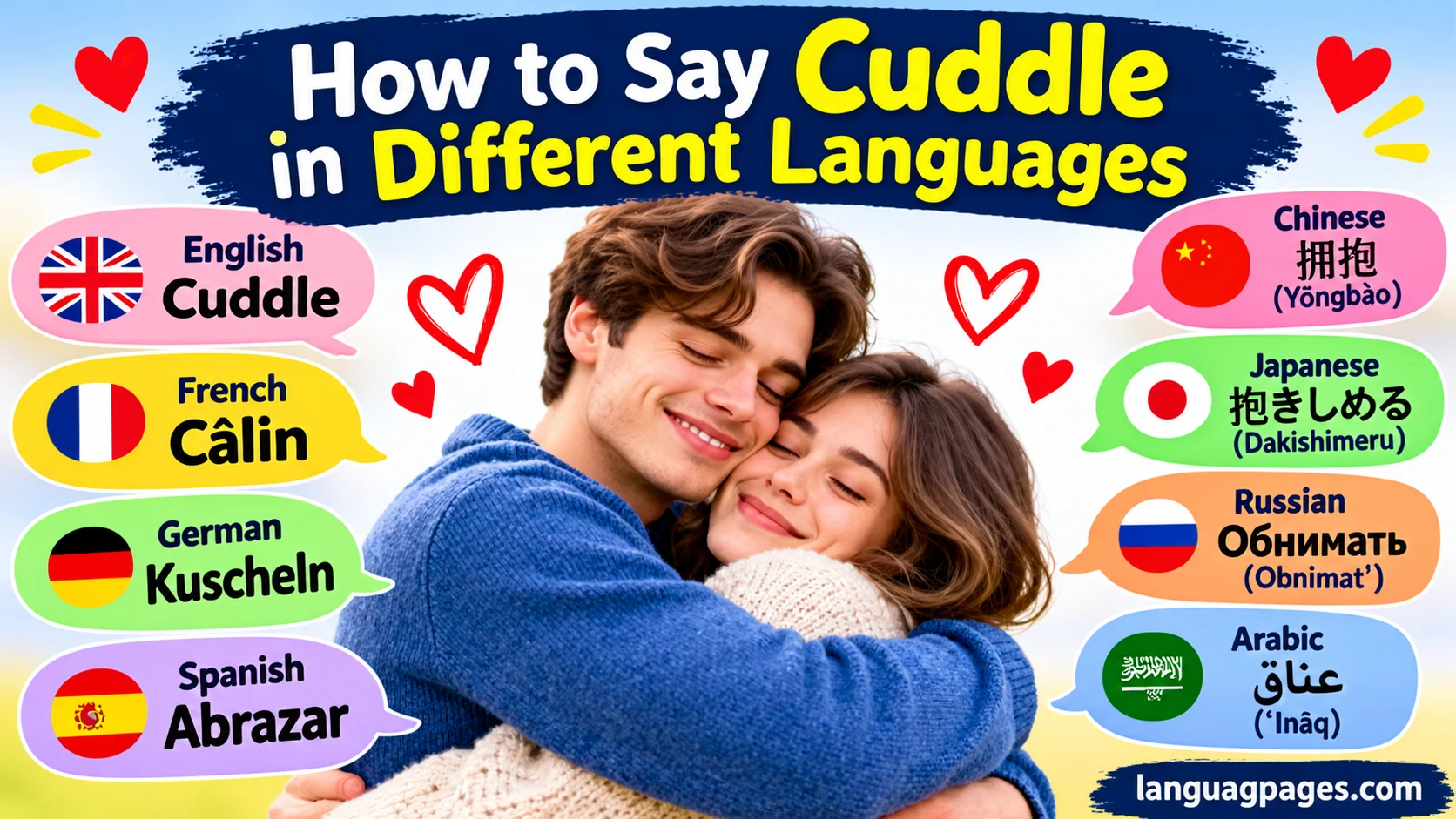
Cuddling is a beautiful way to express affection, comfort, and closeness without saying a word. Learning how to say cuddle in different languages helps you explore romantic vocabulary, discover cultural expressions, and share warm feelings with people around the world.
Whether you are learning a new language, traveling abroad, or looking for a sweet expression for someone special, knowing the word for cuddle in other languages can make communication more meaningful. Different cultures use unique words, phrases, and expressions to describe hugging, snuggling, and showing affection. Understanding these vocabulary differences also helps language learners appreciate how people express love, warmth, and emotional connection in everyday conversations across different countries.
In this article, you will discover how to say cuddle in different languages, including translations, meanings, and useful expressions from around the world. You will explore romantic words, affectionate phrases, pronunciation tips, and cultural differences where relevant. These examples can help you choose the right expression for messages, conversations, or special moments. Keep reading to expand your multilingual vocabulary and learn how people express affection naturally.
Interesting Facts About Cuddle
- The concept of a cuddle exists in virtually every culture, even when no exact equivalent word exists.
- Some languages distinguish between hugging and cuddling, while others use one term for both.
- Certain expressions emphasize warmth and comfort rather than physical contact.
- Informal speech often contains more affectionate cuddle-related expressions than formal language.
- Regional dialects may use different words for the same affectionate action.
- Context often determines whether a translation means snuggle, embrace, or cuddle.
What Does Cuddle Mean?
A cuddle means holding someone closely in a loving, caring, or comforting way. It can occur between romantic partners, parents and children, family members, or even close friends in some cultures. The word often suggests warmth, affection, safety, and emotional connection rather than a formal hug.
Why Can Cuddle Have Different Translations?
A direct word-for-word translation does not always work because languages express affection differently. Factors affecting translation include:
- Relationship between speakers
- Formality level
- Cultural expectations
- Regional vocabulary
- Spoken versus written language
- Literal versus natural wording
Some languages use a dedicated verb for cuddling, while others describe the action as “holding closely” or “snuggling.”
European Languages
Europe contains many language families, each expressing affection differently. Some languages have a dedicated word for cuddling, while others use terms related to hugging, snuggling, or embracing warmly.
| 🌍 Language | Country/Region | Translation | Pronunciation | Example Sentence |
| English | Worldwide | Cuddle | KUH-duhl | Let’s cuddle tonight. |
| American English 🇺🇸 | USA | Cuddle | KUH-duhl | The kids love to cuddle. |
| British English 🇬🇧 | UK | Cuddle | KUH-duhl | She gave him a cuddle. |
| Australian English 🇦🇺 | Australia | Cuddle | KUH-duhl | Come here for a cuddle. |
| Spanish | Spain, Latin America | Acurrucarse | ah-koo-roo-KAR-seh | Nos gusta acurrucarnos. |
| French | France, Canada | Câliner | kah-lee-NAY | Ils aiment se câliner. |
| German | Germany, Austria | Kuscheln | KOOSH-eln | Wir kuscheln auf dem Sofa. |
| Italian | Italy | Coccolare | koh-kohl-LAH-reh | Mi piace coccolare il bambino. |
| Portuguese | Portugal, Brazil | Aconchegar | ah-kon-she-GAR | Vamos nos aconchegar. |
| Dutch | Netherlands | Knuffelen | KNUF-feh-len | Wij knuffelen graag. |
| Swedish | Sweden | Mysa | MEE-sah | Vi myser tillsammans. |
| Norwegian | Norway | Kose | KOO-seh | Vi koser oss hjemme. |
| Danish | Denmark | Hygge sig | HOO-guh sai | De hygger sig sammen. |
| Finnish | Finland | Halata hellästi | HAH-lah-tah | Hän halasi lasta. |
| Icelandic | Iceland | Knúsa | KNOO-sa | Við knúsumst. |
| Irish | Ireland | Barróg a thabhairt | bah-ROHG | Thug sé barróg di. |
| Welsh | Wales | Cwtsh | KUTSH | Dewch am gwtsh. |
| Polish | Poland | Przytulać | pshee-TOO-watch | Lubię cię przytulać. |
| Czech | Czechia | Mazlit se | MAZ-lit seh | Rádi se mazlíme. |
| Slovak | Slovakia | Túliť sa | TOO-lit sa | Radi sa túlime. |
| Ukrainian | Ukraine | Обійматися | ob-ee-MA-ty-sya | Ми обіймаємося. |
| Russian | Russia | Обниматься | ab-nee-MAT-sa | Мы обнимаемся. |
| Romanian | Romania | A se cuibări | kwee-BUH-ree | Ne cuibărim pe canapea. |
| Hungarian | Hungary | Összebújni | ER-seh-boo-ynee | Szeretünk összebújni. |
| Greek | Greece | Αγκαλιάζομαι | an-ga-lee-A-zo-me | Αγκαλιαζόμαστε συχνά. |
| Bulgarian | Bulgaria | Гушкам се | GOOSH-kam seh | Обичаме да се гушкаме. |
| Croatian | Croatia | Maziti se | MA-zi-ti seh | Volimo se maziti. |
| Serbian | Serbia | Maziti se | MA-zi-ti seh | Volimo da se mazimo. |
| Slovenian | Slovenia | Crkljati se | TSERK-lya-ti seh | Rada se crkljava. |
| Lithuanian | Lithuania | Prisiglausti | pree-see-GLOW-stee | Mėgstame prisiglausti. |
| Latvian | Latvia | Samīļot | sa-MEE-lyot | Es tevi samīļošu. |
| Estonian | Estonia | Kaisutama | KAI-su-ta-ma | Nad kaisutavad. |
Cultural Note: In Scandinavian countries, words associated with comfort, coziness, and togetherness often overlap with the idea of cuddling.
Asian Languages
Asia includes hundreds of languages and writing systems. Many languages express cuddling through words meaning embrace, hold closely, or snuggle affectionately.
| 🌍 Language | Country/Region | Translation | Pronunciation | Example Sentence |
| Mandarin Chinese | China | 拥抱 | yōng bào | 我喜欢拥抱你。 |
| Cantonese | Hong Kong | 擁抱 | jung2 pou5 | 我鍾意擁抱你。 |
| Japanese | Japan | 抱きしめる | daki-shimeru | 彼を抱きしめた。 |
| Korean | South Korea | 꼭 껴안다 | kkok kkyeo-an-da | 꼭 껴안고 싶어요. |
| Hindi | India | गले लगाना | gale lagana | मैं तुम्हें गले लगाता हूँ। |
| Urdu | Pakistan | گلے لگانا | gale lagana | مجھے گلے لگانا پسند ہے۔ |
| Bengali | Bangladesh, India | জড়িয়ে ধরা | joriye dhora | সে আমাকে জড়িয়ে ধরল। |
| Punjabi | Pakistan, India | گلے لانا | gale lana | اوہ مینوں گلے لاندی اے۔ |
| Gujarati | India | ભેટવું | bhetvu | તે મને ભેટે છે. |
| Marathi | India | मिठी मारणे | mithi marne | आम्ही मिठी मारतो. |
| Tamil | India, Sri Lanka | கட்டிப்பிடித்தல் | kattippidithal | அவள் என்னை கட்டிப்பிடித்தாள். |
| Telugu | India | కౌగిలించుకోవడం | kaugilinchukovadam | మేము కౌగిలించుకున్నాం. |
| Kannada | India | ಅಪ್ಪಿಕೊಳ್ಳು | appikollu | ಅವನು ನನ್ನನ್ನು ಅಪ್ಪಿಕೊಂಡ. |
| Malayalam | India | ആലിംഗനം ചെയ്യുക | aalinganam | അവർ ആലിംഗനം ചെയ്തു. |
| Nepali | Nepal | अँगालो हाल्नु | angalo halnu | उसले मलाई अँगालो हाल्यो। |
| Sinhala | Sri Lanka | වැළඳගන්නවා | welaendagannawa | ඇය මාව වැළඳගත්තා. |
| Thai | Thailand | กอด | got | ฉันอยากกอดเธอ |
| Vietnamese | Vietnam | Ôm ấp | om ap | Tôi muốn ôm ấp em. |
| Indonesian | Indonesia | Berpelukan | ber-peh-loo-kan | Kami berpelukan. |
| Malay | Malaysia | Berpelukan | ber-peh-loo-kan | Mereka berpelukan. |
| Filipino | Philippines | Yakap | yah-kap | Mahilig siyang yumakap. |
| Burmese | Myanmar | ပွေ့ဖက် | pwe-fet | သူ့ကို ပွေ့ဖက်တယ်။ |
| Khmer | Cambodia | ឱប | ob | ខ្ញុំចូលចិត្តឱប។ |
| Lao | Laos | ກອດ | got | ຂ້ອຍຢາກກອດເຈົ້າ. |
| Mongolian | Mongolia | Тэврэх | tev-rekh | Би чамайг тэвэрнэ. |
| Kazakh | Kazakhstan | Құшақтау | qushaqtau | Мен сені құшақтаймын. |
| Uzbek | Uzbekistan | Quchoqlamoq | qu-choq-la-moq | Seni quchoqlayman. |
| Turkish | Türkiye | Sarılmak | sa-rul-mak | Sana sarılmak istiyorum. |
| Persian | Iran | بغل کردن | baghal kardan | دوست دارم بغلت کنم. |
Cultural Note: In many Asian languages, the same expression may cover both hugging and cuddling, depending on context.
African Languages
Africa is home to extraordinary linguistic diversity. Expressions of affection often emphasize closeness, family connection, and emotional warmth.
| 🌍 Language | Country/Region | Translation | Pronunciation | Example Sentence |
| Swahili | East Africa | Kukumbatia | koo-koom-BA-tee-ah | Ninataka kukukumbatia. |
| Afrikaans | South Africa | Koester | KOO-ster | Ek wil jou koester. |
| Zulu | South Africa | Gona | GO-na | Ngifuna ukukugona. |
| Xhosa | South Africa | Wola | WO-la | Ndifuna ukukuwola. |
| Amharic | Ethiopia | መታቀፍ | metaqef | እወዳለሁ መታቀፍ. |
| Yoruba | Nigeria | Famọra | fa-MO-ra | Mo fẹ́ famọra rẹ. |
| Igbo | Nigeria | Mmakọ | mma-KO | Achọrọ m ịmakọ gị. |
| Hausa | West Africa | Runguma | roon-GOO-ma | Ina son runguma. |
| Somali | Somalia | Habsiin | hab-SEEN | Waan ku habsiinayaa. |
| Shona | Zimbabwe | Kumbundira | koom-boon-DEE-ra | Ndinoda kukumbundira. |
| Sesotho | Lesotho | Aka | AH-ka | Ke batla ho u aka. |
| Setswana | Botswana | Gokara | go-KA-ra | Ke batla go go kara. |
| Kinyarwanda | Rwanda | Guhobera | goo-ho-BEH-ra | Ndashaka kuguhobera. |
| Malagasy | Madagascar | Mamihina | ma-mee-HEE-na | Tiako ny mamihina anao. |
Middle Eastern Languages
The Middle East contains several major language traditions. Meanings can vary between formal and colloquial speech, especially in affectionate expressions.
| 🌍 Language | Country/Region | Translation | Pronunciation | Example Sentence |
| Arabic (MSA) | Middle East | عانق | aaniq | أحب أن أعانقك. |
| Hebrew | Israel | להתחבק | le-hit-cha-bek | אנחנו מתחבקים. |
| Kurdish | Iraq, Türkiye | Baweş kirin | ba-wesh ki-rin | Ez dixwazim te baweş bikim. |
| Armenian | Armenia | Գրկել | grkel | Ես ուզում եմ գրկել քեզ։ |
| Turkish | Türkiye | Sarılmak | sa-rul-mak | Sana sarılmak güzel. |
| Persian | Iran | بغل کردن | baghal kardan | او مرا بغل کرد. |
Other World Languages
| 🌍 Language | Country/Region | Translation | Pronunciation | Example Sentence |
| Māori | New Zealand | Awhi | AH-fee | Ka awhi ahau i a koe. |
| Samoan | Samoa | Fusi | FOO-see | Ou te fia fusi oe. |
| Tongan | Tonga | Fefusi | fe-FOO-see | Oku ou fie fefusi koe. |
| Hawaiian | Hawaii | Apo | AH-po | Makemake au e apo iā ʻoe. |
| Haitian Creole | Haiti | Karese | ka-RES | Mwen renmen karese ou. |
| Esperanto | International | Karesi | ka-RE-see | Mi volas karesi vin. |
| Quechua | Andes | Marq’ay | mar-kai | Qamta marq’ani. |
| Guarani | Paraguay | Añua | an-YOO-a | Aipota roañua. |
Quick Reference: Cuddle in Different Languages
| Language | Translation |
| English | Cuddle |
| Spanish | Acurrucarse |
| French | Câliner |
| German | Kuscheln |
| Italian | Coccolare |
| Portuguese | Aconchegar |
| Dutch | Knuffelen |
| Swedish | Mysa |
| Norwegian | Kose |
| Danish | Hygge sig |
| Polish | Przytulać |
| Russian | Обниматься |
| Mandarin Chinese | 拥抱 |
| Japanese | 抱きしめる |
| Korean | 꼭 껴안다 |
| Hindi | गले लगाना |
| Urdu | گلے لگانا |
| Bengali | জড়িয়ে ধরা |
| Punjabi | گले لाना |
| Tamil | கட்டிப்பிடித்தல் |
| Telugu | కౌగిలించుకోవడం |
| Turkish | Sarılmak |
| Persian | بغل کردن |
| Arabic | عانق |
| Hebrew | להתחבק |
| Swahili | Kukumbatia |
| Zulu | Gona |
| Yoruba | Famọra |
| Somali | Habsiin |
| Māori | Awhi |
| Hawaiian | Apo |
How to Choose the Right Translation
The best translation depends on who is speaking, who is receiving the affection, and the social setting. Some words sound romantic, while others work for family members, children, or friends. Always consider:
- Relationship
- Regional variation
- Formality
- Cultural expectations
- Spoken vs written communication
When unsure, choose the most neutral expression meaning hug warmly or hold affectionately.
Common Mistakes When Translating Cuddle
- Translating every word literally.
- Confusing hug and cuddle.
- Ignoring regional vocabulary.
- Using formal language in casual conversations.
- Overlooking pronunciation differences.
- Assuming one translation works everywhere.
- Forgetting that some languages express cuddling through phrases rather than a single word.
Why Learn Cuddle in Different Languages?
Learning cuddle in different languages helps expand your vocabulary while improving cultural understanding. It can make conversations feel more personal, help travelers communicate naturally, and provide insight into how different societies express affection. Understanding these variations also improves language-learning skills and appreciation for global communication.
FAQs:
How do you say cuddle in different languages?
Different languages use different words, such as Kuscheln in German, Câliner in French, and Sarılmak in Turkish.
Is there one universal translation for cuddle?
No. The best translation depends on language and context.
Can cuddle mean the same as hug?
Sometimes, but cuddling often suggests longer, warmer physical closeness.
Why do some languages use phrases instead of one word?
Certain languages describe the action rather than using a dedicated verb.
Does pronunciation matter?
Yes. Correct pronunciation helps avoid confusion and improves communication.
Is a literal translation always accurate?
No. Natural translations are usually more useful than word-for-word versions.
Which languages use non-Latin scripts?
Arabic, Chinese, Japanese, Korean, Hindi, Urdu, Bengali, Russian, and many others.
Can translations change by country?
Yes. Regional vocabulary and dialects can influence the preferred wording.
Are cuddle expressions always romantic?
No. Many languages use them for family affection and emotional comfort.
Can learning affectionate expressions improve language skills?
Yes. They help learners understand everyday communication and cultural nuances.
Conclusion:
Learning How to Say Cuddle in Different Languages helps you express affection, warmth, and closeness across cultures. From romantic expressions to everyday words for snuggling, these translations make communication more meaningful and help you connect with people through language, emotions, and shared experiences.
Exploring cuddle translations, affectionate vocabulary, and romantic phrases introduces you to the beautiful ways different cultures express love. Use these words in conversations, sweet messages, or special moments with someone you care about. Keep practicing the pronunciation and meanings to communicate naturally, expand your multilingual vocabulary, and discover new ways to express affection around the world.