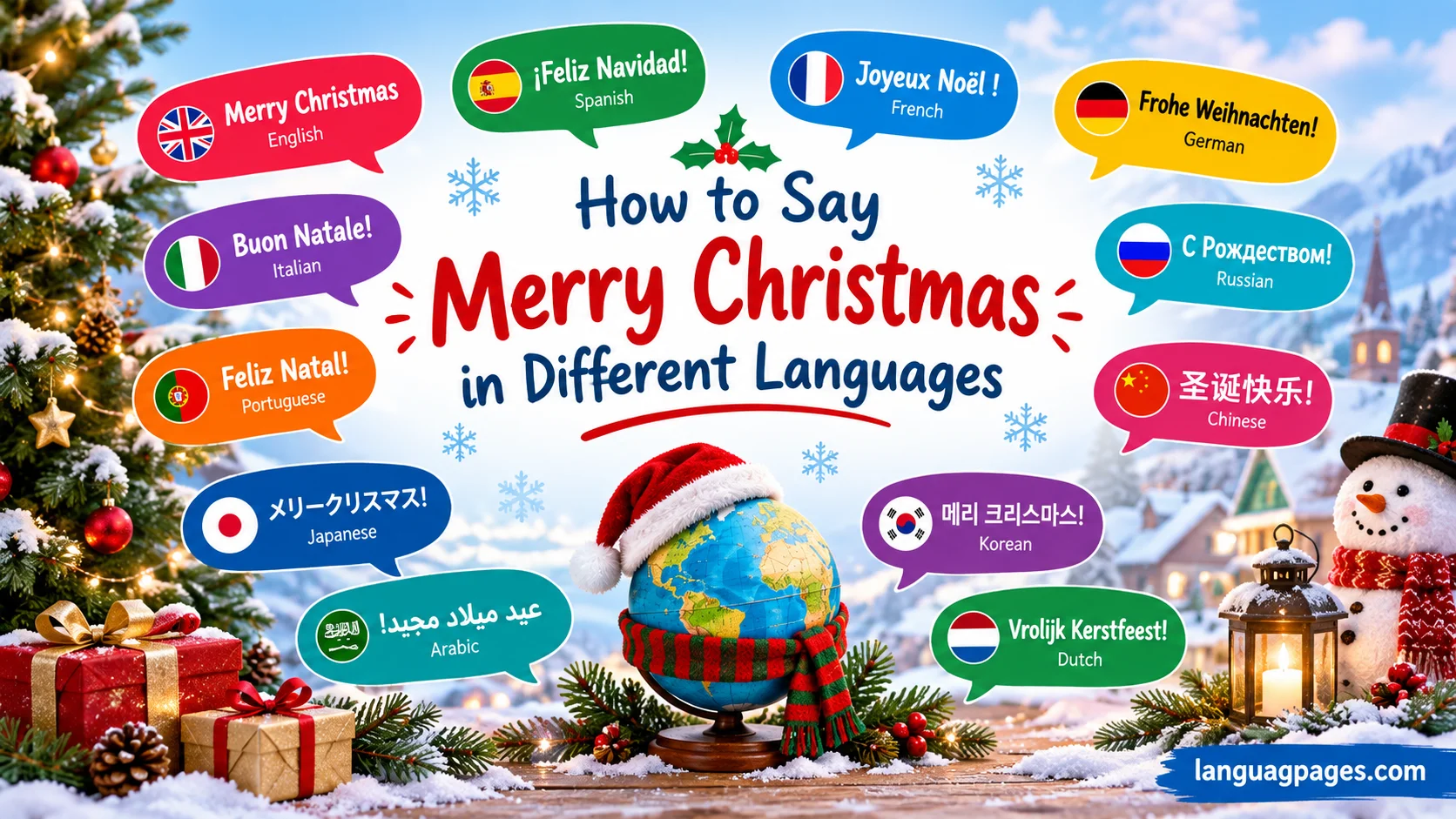
Have you ever wondered how Merry Christmas fits naturally into everyday greetings, English usage, and seasonal communication across different contexts and cultures?
Whether used in personal greetings, business communication, online booking messages, broadcasting, meetings, or a calendar reminder, seasonal language benefits from clear grammar, appropriate tone, and consistency. This article explores natural usage, formal writing, regional preferences, and practical examples to help readers communicate confidently during Christmas.
You’ll also discover how style guides, US vs. UK English, and modern communication habits influence festive expressions. From scheduling and time management to project management, this guide explains when seasonal wording sounds natural, professional, friendly, or contextually appropriate across written and digital communication.
Interesting Facts About Merry Christmas
- Merry Christmas is one of the most translated holiday greetings worldwide.
- Some languages use a phrase meaning “Happy Christmas” instead of “Merry Christmas.”
- Regional dialects may have slightly different holiday greetings.
- Certain cultures include wishes for peace, blessings, or prosperity in Christmas greetings.
- The same language can have different Christmas expressions depending on the country.
- Some greetings are commonly used in writing, while others are more natural in conversation.
What Does Merry Christmas Mean?
Merry Christmas is a greeting used to wish someone a joyful and happy Christmas season. It expresses goodwill, celebration, kindness, and festive spirit. People commonly use it in conversations, greeting cards, emails, social media posts, and holiday gatherings.
Why Can Merry Christmas Have Different Translations?
There is rarely a perfect word-for-word translation between languages. Different translations may depend on:
- Formality
- Regional dialects
- Religious traditions
- Cultural customs
- Written versus spoken language
- Natural expression versus literal translation
The most effective translation is usually the one that sounds natural to native speakers rather than a direct translation of each English word.
European Languages
Europe contains many language families, traditions, and cultural influences. While the meaning of Christmas greetings remains similar, wording and tone can vary between countries and regions.
| 🌍 Language | Country/Region | Translation | Pronunciation | Example Sentence |
| English | UK, USA, Canada | Merry Christmas | MEH-ree KRIS-məs | Merry Christmas to you and your family. |
| American English 🇺🇸 | United States | Merry Christmas | Same as standard | Merry Christmas from New York! |
| British English 🇬🇧 | United Kingdom | Merry Christmas | Same as standard | Merry Christmas and best wishes. |
| Australian English 🇦🇺 | Australia | Merry Christmas | Same wording | Merry Christmas, mate! |
| Spanish | Spain, Latin America | Feliz Navidad | feh-LEEZ nah-vee-DAD | ¡Feliz Navidad a todos! |
| French | France, Canada | Joyeux Noël | zhwah-YEU no-EL | Joyeux Noël à votre famille. |
| German | Germany, Austria | Frohe Weihnachten | FROH-uh VY-nakh-ten | Frohe Weihnachten! |
| Italian | Italy | Buon Natale | BWOHN na-TAH-leh | Buon Natale a tutti. |
| Portuguese | Portugal, Brazil | Feliz Natal | feh-LEEZ na-TAHL | Feliz Natal! |
| Dutch | Netherlands | Vrolijk Kerstfeest | VRO-lake KERST-fest | Vrolijk Kerstfeest! |
| Swedish | Sweden | God Jul | GOOD YOOL | God Jul! |
| Norwegian | Norway | God Jul | GOOD YOOL | God Jul og godt nyttår. |
| Danish | Denmark | Glædelig Jul | GLEH-the-lig YOOL | Glædelig Jul! |
| Finnish | Finland | Hyvää Joulua | HUU-vaa YO-lua | Hyvää Joulua! |
| Icelandic | Iceland | Gleðileg Jól | GLETH-i-leg YOHL | Gleðileg Jól! |
| Polish | Poland | Wesołych Świąt | ve-SO-wih SHVYONT | Wesołych Świąt! |
| Czech | Czech Republic | Veselé Vánoce | VE-se-leh VA-no-tse | Veselé Vánoce! |
| Slovak | Slovakia | Veselé Vianoce | VE-se-leh vee-a-NO-tse | Veselé Vianoce! |
| Ukrainian | Ukraine | Веселого Різдва | ve-SE-lo-ho riz-DVA | Веселого Різдва! |
| Russian | Russia | С Рождеством | s raZH-dest-VOM | С Рождеством! |
| Romanian | Romania | Crăciun Fericit | kra-CHOON fe-ri-CHEET | Crăciun Fericit! |
| Greek | Greece | Καλά Χριστούγεννα | ka-LA hri-STOO-yen-na | Καλά Χριστούγεννα! |
Cultural Note: Some European languages use greetings that literally mean “Happy Christmas” rather than “Merry Christmas.”
Asian Languages
Asia contains a remarkable variety of languages, scripts, and traditions. Christmas greetings are often adapted to local pronunciation and writing systems.
| 🌍 Language | Country/Region | Translation | Pronunciation | Example Sentence |
| Mandarin Chinese | China, Taiwan | 圣诞快乐 | Shèngdàn Kuàilè | 圣诞快乐! |
| Cantonese | Hong Kong | 聖誕快樂 | Sing3 daan3 faai3 lok6 | 聖誕快樂! |
| Japanese | Japan | メリークリスマス | Merī Kurisumasu | メリークリスマス! |
| Korean | South Korea | 메리 크리스마스 | Meri Keuriseumaseu | 메리 크리스마스! |
| Hindi | India | मेरी क्रिसमस | Meri Krismas | मेरी क्रिसमस! |
| Urdu | Pakistan | میری کرسمس | Meri Krismas | میری کرسمس! |
| Bengali | Bangladesh, India | মেরি ক্রিসমাস | Meri Krismas | মেরি ক্রিসমাস! |
| Punjabi | Pakistan, India | ਮੇਰੀ ਕਰਿਸਮਸ | Meri Krismas | ਮੇਰੀ ਕਰਿਸਮਸ! |
| Gujarati | India | મેરી ક્રિસમસ | Meri Krismas | મેરી ક્રિસમસ! |
| Marathi | India | मेरी ख्रिसमस | Meri Khrismas | मेरी ख्रिसमस! |
| Tamil | India, Sri Lanka | மெர்ரி கிறிஸ்துமஸ் | Merri Kiristumas | மெர்ரி கிறிஸ்துமஸ்! |
| Telugu | India | మెర్రీ క్రిస్మస్ | Merri Krismas | మెర్రీ క్రిస్మస్! |
| Kannada | India | ಮೆರಿ ಕ್ರಿಸ್ಮಸ್ | Meri Krismas | ಮೆರಿ ಕ್ರಿಸ್ಮಸ್! |
| Malayalam | India | മെറി ക്രിസ്മസ് | Meri Krismas | മെറി ക്രിസ്മസ്! |
| Nepali | Nepal | मेरी क्रिसमस | Meri Krismas | मेरी क्रिसमस! |
| Sinhala | Sri Lanka | සුභ නත්තලක් | Subha Naththalak | සුභ නත්තලක්! |
| Thai | Thailand | สุขสันต์วันคริสต์มาส | Suk-san wan Christmas | สุขสันต์วันคริสต์มาส |
| Vietnamese | Vietnam | Giáng Sinh Vui Vẻ | Zyang Sin Vui Veh | Giáng Sinh Vui Vẻ! |
| Indonesian | Indonesia | Selamat Natal | Se-la-mat Na-tal | Selamat Natal! |
| Malay | Malaysia | Selamat Hari Krismas | Se-la-mat Ha-ri Kris-mas | Selamat Hari Krismas! |
| Filipino | Philippines | Maligayang Pasko | Ma-li-ga-yang Pas-ko | Maligayang Pasko! |
African Languages
Africa is home to thousands of languages belonging to several major language families. Christmas greetings often reflect local linguistic traditions.
| 🌍 Language | Country/Region | Translation | Pronunciation |
| Swahili | East Africa | Krismasi Njema | kri-SMA-si N-je-ma |
| Afrikaans | South Africa | Geseënde Kersfees | khe-SE-en-de KERS-fays |
| Zulu | South Africa | UKhisimusi Omuhle | oo-khi-si-MOO-si o-MOO-hleh |
| Xhosa | South Africa | Krisimesi emnandi | kri-si-ME-si em-NAN-di |
| Amharic | Ethiopia | መልካም የገና በዓል | Melkam Ye Gena Beal |
| Yoruba | Nigeria | E ku odun keresimesi | eh koo oh-dun ke-re-si-me-si |
| Igbo | Nigeria | Ekeresimesi Oma | eh-ke-re-si-me-si OH-ma |
| Hausa | West Africa | Barka da Kirsimeti | BAR-ka da kir-si-MEH-ti |
| Somali | Somalia | Ciid Wanaagsan | EED wa-naag-san |
| Shona | Zimbabwe | Kisimusi Yakanaka | ki-si-MU-si ya-ka-na-ka |
| Sesotho | Lesotho | Keresemese e monate | ke-re-se-ME-se eh mo-NA-te |
| Setswana | Botswana | Keresemose e e monate | ke-re-se-MO-se |
| Kinyarwanda | Rwanda | Noheli Nziza | no-HE-li n-ZEE-za |
| Malagasy | Madagascar | Krismasy Sambatra | kris-MA-si sam-BA-tra |
Middle Eastern Languages
The Middle East includes several language traditions and writing systems. Christmas greetings may vary by dialect, especially in Arabic-speaking regions.
| 🌍 Language | Country/Region | Translation | Pronunciation |
| Modern Standard Arabic | Middle East | عيد ميلاد مجيد | Eid Milad Majid |
| Persian (Farsi) | Iran | کریسمس مبارک | Kerismas Mobarak |
| Hebrew | Israel | חג מולד שמח | Chag Molad Sameach |
| Kurdish | Iraq, Türkiye, Syria | Krismas Pîroz Be | kris-mas pee-ROZ beh |
| Turkish | Türkiye | Mutlu Noeller | MOOT-loo no-el-ler |
| Armenian | Armenia | Շնորհավոր Սուրբ Ծնունդ | Shnorhavor Surb Tsnund |
Cultural Note: In Arabic-speaking regions, Christmas greetings can differ between Modern Standard Arabic and local dialects.
Other World Languages
| 🌍 Language | Country/Region | Translation |
| Māori | New Zealand | Meri Kirihimete |
| Samoan | Samoa | Manuia le Kerisimasi |
| Tongan | Tonga | Kilisimasi Fiefia |
| Hawaiian | Hawaii | Mele Kalikimaka |
| Haitian Creole | Haiti | Jwaye Nwèl |
| Esperanto | International | Feliĉan Kristnaskon |
| Guarani | Paraguay | Vy’apavê Arapokõindy |
| Quechua | Andes Region | Kusikuy Navidad |
Quick Reference: Merry Christmas in Different Languages
| Language | Translation |
| Spanish | Feliz Navidad |
| French | Joyeux Noël |
| German | Frohe Weihnachten |
| Italian | Buon Natale |
| Portuguese | Feliz Natal |
| Dutch | Vrolijk Kerstfeest |
| Swedish | God Jul |
| Mandarin Chinese | 圣诞快乐 |
| Japanese | メリークリスマス |
| Korean | 메리 크리스마스 |
| Hindi | मेरी क्रिसमस |
| Urdu | میری کرسمس |
| Arabic | عيد ميلاد مجيد |
| Hebrew | חג מולד שמח |
| Turkish | Mutlu Noeller |
| Swahili | Krismasi Njema |
| Afrikaans | Geseënde Kersfees |
| Māori | Meri Kirihimete |
| Hawaiian | Mele Kalikimaka |
| Esperanto | Feliĉan Kristnaskon |
How to Choose the Right Translation
The best translation depends on context, audience, region, and formality. When communicating with native speakers, choose the version commonly used in their country. If you are unsure, a widely recognized standard form is usually a safe choice.
Common Mistakes When Translating Merry Christmas
- Translating word-for-word instead of using the natural greeting.
- Mixing formal and informal expressions.
- Ignoring regional differences.
- Using incorrect pronunciation.
- Assuming one translation works everywhere a language is spoken.
- Confusing dialect forms with standard language.
Why Learn Merry Christmas in Different Languages?
Learning holiday greetings helps you:
- Connect with people from different cultures.
- Improve language-learning skills.
- Travel with greater confidence.
- Personalize messages and greeting cards.
- Develop cultural awareness.
- Understand pronunciation and vocabulary differences.
FAQs:
How do you say Merry Christmas in Spanish?
Feliz Navidad.
How do you say Merry Christmas in French?
Joyeux Noël.
Is a literal translation always correct?
No. Natural usage is usually more important than literal wording.
Can translations vary by country?
Yes. Regional usage may differ even within the same language.
Why do some languages use Happy Christmas?
Certain languages traditionally express the idea as Happy Christmas rather than Merry Christmas.
Does pronunciation matter?
Yes. Correct pronunciation improves understanding and respect for the language.
Which languages use non-Latin scripts?
Examples include Arabic, Chinese, Japanese, Korean, Hebrew, Hindi, Urdu, and Thai.
Can I use these greetings in holiday cards?
Yes. They are commonly used in cards, messages, and greetings.
Is Christmas celebrated the same way everywhere?
No. Traditions vary widely between countries and cultures.
Why learn holiday greetings in different languages?
They help build cultural awareness and create more meaningful communication.
Conclusion:
Understanding Merry Christmas helps you choose the right expression for holiday greetings, English usage, and everyday communication, whether you are writing casually, professionally, or across different cultural settings.
With attention to grammar, tone, and regional preferences, your Christmas messages can remain natural and respectful. Whether writing formal messages or friendly greetings, clear language, cultural awareness, and consistent usage make every seasonal expression more effective.












