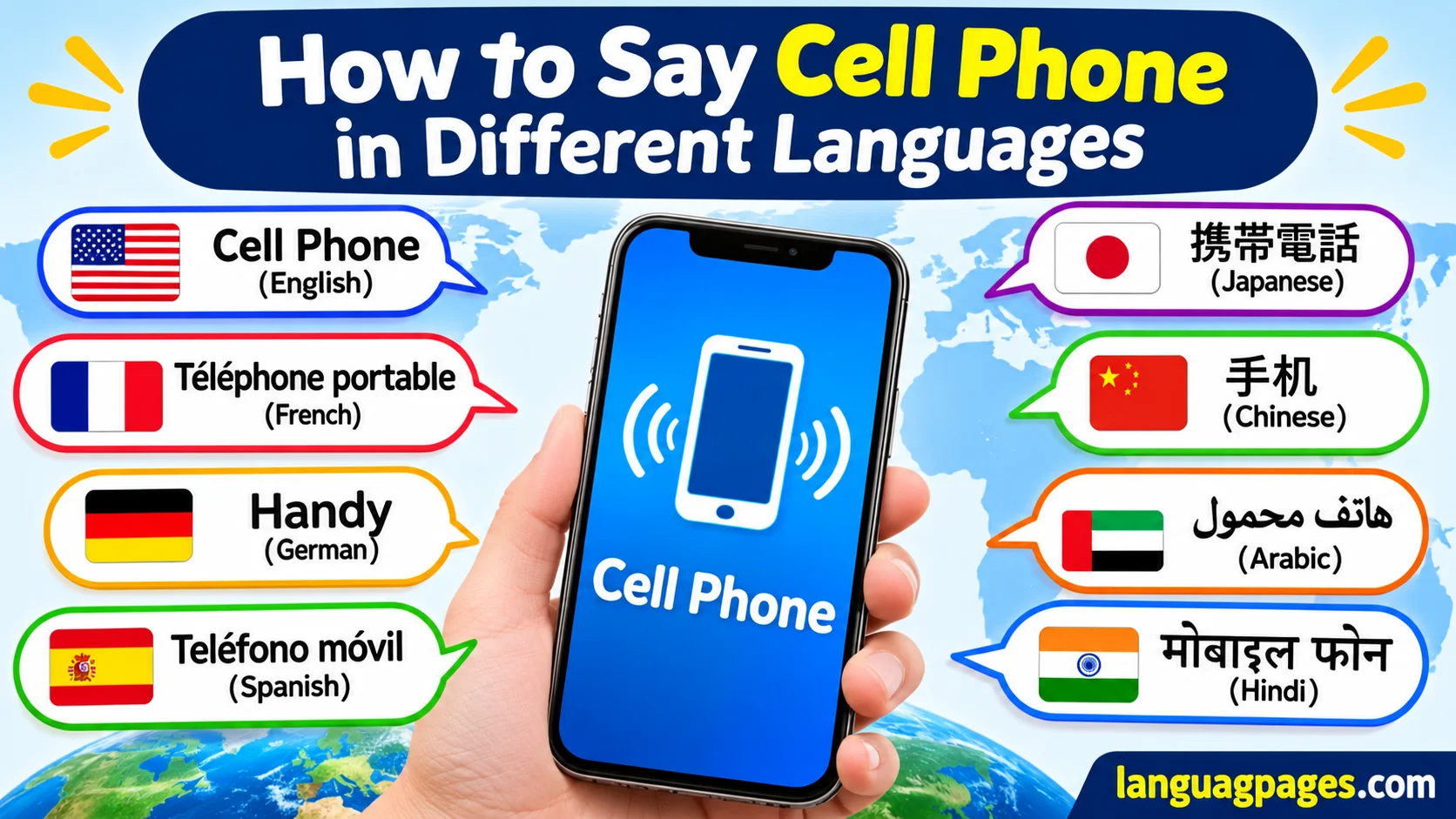
A cell phone keeps people connected while supporting scheduling, time management, communication, and everyday tasks across locations and time zones with ease.
From business communication and online booking to broadcasting, meetings, calendar updates, and project management, this guide explores how English usage and grammar shape the term. It also considers formal writing, everyday speech, and regional preferences, including US and UK style guides, where “cell phone” and “mobile phone” differ.
You’ll discover the meaning, usage, and contextual differences behind this familiar technology term, along with practical examples for clear, consistent communication. Whether you’re writing professionally, studying English, or communicating internationally, understanding regional wording can improve precision and consistency. The article also explains how related expressions may change according to audience, setting, and language variety.
Interesting Facts About Cell Phone
- “Cell phone” is mainly North American English, while “mobile phone” is especially common in Britain and many other English-speaking regions.
- Many languages use words meaning mobile, portable, handheld, or pocket telephone.
- German commonly uses Handy, an everyday term that does not literally translate as “cell phone.”
- Mandarin Chinese commonly uses 手机 (shǒujī), literally associated with a “hand” and “machine.”
- Japanese commonly uses 携帯電話 (keitai denwa), meaning a portable telephone.
- Some languages have both a formal term and a shorter conversational form.
- Regional differences matter. For example, Spanish may use teléfono móvil in Spain and teléfono celular in many parts of Latin America.
What Does Cell Phone Mean?
A cell phone is a portable telephone that connects to a communications network through radio signals rather than a fixed wired connection. It can be used for calls, messages, internet access, applications, photography, navigation, and many other functions.
In everyday English, cell phone, cellphone, and mobile phone generally describe the same kind of device. The main difference is regional usage. “Cell phone” is particularly associated with American English, while “mobile phone” is common in British English.
The expression can also be shortened to phone when the context is obvious.
Why Can Cell Phone Have Different Translations?
There is not always one perfect word-for-word translation for cell phone. Languages organize technology vocabulary differently. One language may describe the device as a mobile telephone, another as a portable telephone, and another may use a short borrowed or conventional term.
The appropriate choice can depend on country, dialect, formality, age group, and context. Written language may favor a longer standard expression, while conversation may use a shorter form. For example, Spanish has both teléfono móvil and teléfono celular, while German commonly uses Handy.
European Languages
Europe contains several language families, so technology vocabulary varies considerably. Some languages use compounds meaning mobile telephone, while others prefer short everyday nouns. The following forms represent commonly understandable modern usage.
| 🌍 Language | Country/Region | Translation | Pronunciation | Example Sentence |
| English (US) 🇺🇸 | United States | cell phone | sel fohn | My cell phone is new. — My cell phone is new. |
| English (UK) 🇬🇧 | United Kingdom | mobile phone | MOH-byle fohn | My mobile phone is charging. — My mobile is charging. |
| English (Australia) 🇦🇺 | Australia | mobile phone | MOH-byle fohn | Where is my mobile phone? — Where is my mobile? |
| Spanish 🇪🇸 | Spain | teléfono móvil | teh-LEH-foh-noh MOH-beel | Mi teléfono móvil está aquí. — My mobile phone is here. |
| French 🇫🇷 | France | téléphone portable | tay-lay-FOHN por-TAH-bl | Mon téléphone portable est chargé. — My phone is charged. |
| German 🇩🇪 | Germany | Handy | HEN-dee | Mein Handy ist neu. — My cell phone is new. |
| Italian 🇮🇹 | Italy | cellulare | chel-loo-LAH-reh | Il mio cellulare è qui. — My cell phone is here. |
| Portuguese 🇵🇹 | Portugal | telemóvel | teh-leh-MOH-vel | O meu telemóvel está aqui. — My mobile phone is here. |
| Dutch 🇳🇱 | Netherlands | mobiele telefoon | moh-BEE-luh tay-luh-FOHN | Mijn mobiele telefoon is nieuw. — My mobile phone is new. |
| Swedish 🇸🇪 | Sweden | mobiltelefon | moo-BEEL-teh-leh-fohn | Min mobiltelefon är ny. — My cell phone is new. |
| Norwegian 🇳🇴 | Norway | mobiltelefon | moo-BEEL-teh-leh-fohn | Mobiltelefonen min er ny. — My cell phone is new. |
| Danish 🇩🇰 | Denmark | mobiltelefon | moh-BEEL-teh-leh-fohn | Min mobiltelefon er ny. — My cell phone is new. |
| Finnish 🇫🇮 | Finland | matkapuhelin | MAHT-kah-poo-heh-leen | Matkapuhelimeni on uusi. — My cell phone is new. |
| Icelandic 🇮🇸 | Iceland | farsími | FAR-see-mee | Farsíminn minn er nýr. — My cell phone is new. |
| Irish 🇮🇪 | Ireland | fón póca | fohn POH-kah | Tá mo fhón póca anseo. — My cell phone is here. |
| Welsh 🏴 | Wales | ffôn symudol | fohn suh-MEE-dol | Mae fy ffôn symudol yma. — My mobile phone is here. |
| Polish 🇵🇱 | Poland | telefon komórkowy | teh-LEH-fohn koh-MOOR-koh-vih | Mój telefon komórkowy jest nowy. — My cell phone is new. |
| Czech 🇨🇿 | Czechia | mobilní telefon | MOH-beel-nee teh-leh-FOHN | Můj mobilní telefon je nový. — My mobile phone is new. |
| Slovak 🇸🇰 | Slovakia | mobilný telefón | MOH-beel-nee teh-leh-FOHN | Môj mobilný telefón je nový. — My mobile phone is new. |
| Ukrainian 🇺🇦 | Ukraine | мобільний телефон | moh-BEEL-nyy teh-leh-FOHN | Мій мобільний телефон новий. — My mobile phone is new. |
| Russian 🇷🇺 | Russia | мобильный телефон | moh-BEEL-nyy teh-leh-FOHN | Мой мобильный телефон новый. — My mobile phone is new. |
| Romanian 🇷🇴 | Romania | telefon mobil | teh-leh-FOHN moh-BEEL | Telefonul meu mobil este nou. — My cell phone is new. |
| Hungarian 🇭🇺 | Hungary | mobiltelefon | MOH-beel-teh-leh-fohn | A mobiltelefonom új. — My cell phone is new. |
| Greek 🇬🇷 | Greece | κινητό τηλέφωνο | kee-nee-TOH tee-LEH-foh-noh | Το κινητό μου είναι καινούριο. — My cell phone is new. |
| Bulgarian 🇧🇬 | Bulgaria | мобилен телефон | moh-BEE-len teh-leh-FOHN | Моят мобилен телефон е нов. — My mobile phone is new. |
| Croatian 🇭🇷 | Croatia | mobitel | MOH-bee-tel | Moj mobitel je nov. — My cell phone is new. |
| Serbian 🇷🇸 | Serbia | мобилни телефон | MOH-beel-nee teh-leh-FOHN | Мој мобилни телефон је нов. — My mobile phone is new. |
| Slovenian 🇸🇮 | Slovenia | mobilni telefon | moh-BEEL-nee teh-leh-FOHN | Moj mobilni telefon je nov. — My mobile phone is new. |
| Lithuanian 🇱🇹 | Lithuania | mobilusis telefonas | moh-beh-LOO-sis teh-leh-FOH-nas | Mano mobilusis telefonas naujas. — My mobile phone is new. |
| Latvian 🇱🇻 | Latvia | mobilais tālrunis | moh-BEE-lies TAHL-roo-nees | Mans mobilais tālrunis ir jauns. — My mobile phone is new. |
| Estonian 🇪🇪 | Estonia | mobiiltelefon | moh-BEEL-teh-leh-fohn | Minu mobiiltelefon on uus. — My mobile phone is new. |
| Catalan 🇦🇩 | Catalonia | telèfon mòbil | teh-LEH-fohn MOH-beel | El meu telèfon mòbil és nou. — My mobile phone is new. |
| Albanian 🇦🇱 | Albania | telefon celular | teh-leh-FOHN cheh-loo-LAR | Telefoni im celular është i ri. — My cell phone is new. |
The core European pattern is easy to notice: many languages combine a word related to mobile with a word meaning telephone, while others use a compact everyday term. German Handy and Croatian mobitel are useful reminders that natural vocabulary does not always follow English structure.
American English 🇺🇸
Cell phone is the normal American English expression. “Cell” can also be used informally when the context is clear.
British English 🇬🇧
Mobile phone is the standard everyday expression. “Mobile” is also common. Cambridge specifically identifies “mobile” and “mobile phone” as usual UK forms.
Australian English 🇦🇺
Mobile phone and simply mobile are natural Australian English choices. The wording does not need to be artificially changed from British English.
Asian Languages
Asia includes many unrelated language families and several writing systems. Technology terms may be native compounds, borrowed words, or shortened conversational expressions.
| 🌍 Language | Country/Region | Translation | Pronunciation | Example Sentence |
| Mandarin Chinese 🇨🇳 | China, Taiwan, Singapore | 手机 | SHŌU-jī | 我的手机在这里。 — My cell phone is here. |
| Cantonese 🇭🇰 | Hong Kong, Guangdong | 手機 | SAU-gei | 我部手機喺度。 — My phone is here. |
| Japanese 🇯🇵 | Japan | 携帯電話 | keh-TAI den-WAH | 私の携帯電話はここです。 — My cell phone is here. |
| Korean 🇰🇷 | South Korea | 휴대전화 / 휴대폰 | hyoo-dae-juhn-hwa | 제 휴대폰은 새것이에요. — My cell phone is new. |
| Hindi 🇮🇳 | India | मोबाइल फ़ोन | MOH-byle fohn | मेरा मोबाइल फ़ोन नया है। — My cell phone is new. |
| Urdu 🇵🇰 | Pakistan, India | موبائل فون | MOH-bile fohn | میرا موبائل فون نیا ہے۔ — My cell phone is new. |
| Bengali 🇧🇩 | Bangladesh, India | মোবাইল ফোন | MOH-byle fohn | আমার মোবাইল ফোনটি নতুন। — My cell phone is new. |
| Punjabi 🇵🇰🇮🇳 | Punjab regions | ਮੋਬਾਈਲ ਫ਼ੋਨ | MOH-byle fohn | ਮੇਰਾ ਮੋਬਾਈਲ ਫ਼ੋਨ ਨਵਾਂ ਹੈ। — My cell phone is new. |
| Gujarati 🇮🇳 | Gujarat, India | મોબાઇલ ફોન | MOH-byle fohn | મારો મોબાઇલ ફોન નવો છે. — My cell phone is new. |
| Marathi 🇮🇳 | Maharashtra, India | मोबाईल फोन | MOH-byle fohn | माझा मोबाईल फोन नवीन आहे. — My cell phone is new. |
| Tamil 🇮🇳🇱🇰 | Tamil-speaking regions | கைபேசி | kai-PAY-see | என் கைபேசி புதியது. — My cell phone is new. |
| Telugu 🇮🇳 | Andhra Pradesh, Telangana | మొబైల్ ఫోన్ | MOH-byle fohn | నా మొబైల్ ఫోన్ కొత్తది. — My cell phone is new. |
| Kannada 🇮🇳 | Karnataka, India | ಮೊಬೈಲ್ ಫೋನ್ | MOH-byle fohn | ನನ್ನ ಮೊಬೈಲ್ ಫೋನ್ ಹೊಸದು. — My cell phone is new. |
| Malayalam 🇮🇳 | Kerala, India | മൊബൈൽ ഫോൺ | MOH-byle fohn | എന്റെ മൊബൈൽ ഫോൺ പുതിയതാണ്. — My cell phone is new. |
| Nepali 🇳🇵 | Nepal | मोबाइल फोन | MOH-byle fohn | मेरो मोबाइल फोन नयाँ छ। — My cell phone is new. |
| Sinhala 🇱🇰 | Sri Lanka | ජංගම දුරකථනය | JANG-ga-ma doo-ra-kah-tha-na-ya | මගේ ජංගම දුරකථනය අලුත්. — My cell phone is new. |
| Thai 🇹🇭 | Thailand | โทรศัพท์มือถือ | toh-ra-SAP meu-TEU | โทรศัพท์มือถือของฉันใหม่ — My cell phone is new. |
| Vietnamese 🇻🇳 | Vietnam | điện thoại di động | dee-en THWAI dee DONG | Điện thoại di động của tôi mới. — My cell phone is new. |
| Indonesian 🇮🇩 | Indonesia | ponsel | PON-sel | Ponsel saya baru. — My cell phone is new. |
| Malay 🇲🇾 | Malaysia, Brunei | telefon bimbit | teh-leh-FOHN BEEM-bit | Telefon bimbit saya baharu. — My cell phone is new. |
| Filipino/Tagalog 🇵🇭 | Philippines | cellphone | SEL-fohn | Bago ang cellphone ko. — My cell phone is new. |
| Burmese 🇲🇲 | Myanmar | မိုဘိုင်းဖုန်း | moh-byle fone | ကျွန်တော့်မိုဘိုင်းဖုန်းအသစ်ပါ။ — My cell phone is new. |
| Khmer 🇰🇭 | Cambodia | ទូរស័ព្ទដៃ | too-rah-SAP dai | ទូរស័ព្ទដៃរបស់ខ្ញុំថ្មី។ — My cell phone is new. |
| Lao 🇱🇦 | Laos | ໂທລະສັບມືຖື | toh-la-SAP meu-TEU | ໂທລະສັບມືຖືຂອງຂ້ອຍໃໝ່. — My cell phone is new. |
| Mongolian 🇲🇳 | Mongolia | гар утас | gar OO-tas | Миний гар утас шинэ. — My cell phone is new. |
| Kazakh 🇰🇿 | Kazakhstan | ұялы телефон | oo-YAH-ly teh-leh-FOHN | Менің ұялы телефоным жаңа. — My cell phone is new. |
| Uzbek 🇺🇿 | Uzbekistan | mobil telefon | moh-BEEL teh-leh-FOHN | Mobil telefonim yangi. — My cell phone is new. |
Mandarin 手机, Japanese 携帯電話, and Korean 휴대전화/휴대폰 demonstrate how nearby countries can use completely different linguistic structures for the same device. Modern South Asian usage also frequently uses forms based on the borrowed expression mobile phone.
African Languages
Africa has enormous linguistic diversity, so no single expression represents the continent. Many modern technology terms combine local vocabulary with internationally familiar words.
| 🌍 Language | Country/Region | Translation | Pronunciation | Example Sentence |
| Swahili 🇰🇪 | Kenya, Tanzania, East Africa | simu ya mkononi | SEE-moo yah mko-NOH-nee | Simu yangu ya mkononi ni mpya. — My cell phone is new. |
| Afrikaans 🇿🇦 | South Africa, Namibia | selfoon | SEL-fohn | My selfoon is nuut. — My cell phone is new. |
| Zulu 🇿🇦 | South Africa | umakhalekhukhwini | oo-mah-kah-leh-khoo-KHWIN-ee | Umakhalekhukhwini wami musha. — My cell phone is new. |
| Xhosa 🇿🇦 | South Africa | iselfowuni | ee-sel-foh-woo-nee | Iselofowuni yam intsha. — My cell phone is new. |
| Amharic 🇪🇹 | Ethiopia | ሞባይል ስልክ | moh-BYLE silk | ሞባይል ስልኬ አዲስ ነው። — My cell phone is new. |
| Yoruba 🇳🇬 | Nigeria | foonu alagbeka | FOH-noo ah-lah-gbeh-kah | Foonu alagbeka mi jẹ́ tuntun. — My cell phone is new. |
| Hausa 🇳🇬 | Nigeria, Niger | wayar hannu | WAH-yar HAN-noo | Wayar hannuna sabuwa ce. — My cell phone is new. |
| Malagasy 🇲🇬 | Madagascar | finday | feen-DIE | Vaovao ny findaiko. — My cell phone is new. |
The terms simu ya mkononi, selfoon, and foonu alagbeka show different ways African languages adapt technology vocabulary. Amharic sources also document ሞባይል ስልክ for “cell phone.”
Middle Eastern Languages
The Middle East contains distinct language traditions, so it is important not to treat Arabic, Persian, Hebrew, Kurdish, Turkish, and Armenian as interchangeable. Arabic also has substantial dialect variation.
| 🌍 Language | Country/Region | Translation | Pronunciation | Example Sentence |
| Arabic 🇸🇦 | Arabic-speaking countries | هاتف محمول | HAA-tif mah-MOOL | هاتفي المحمول جديد. — My mobile phone is new. |
| Persian 🇮🇷 | Iran, Afghanistan, Tajik communities | تلفن همراه | teh-leh-FON ham-RAH | تلفن همراهم جدید است. — My cell phone is new. |
| Hebrew 🇮🇱 | Israel | טלפון נייד | teh-LEH-fohn nah-EED | הטלפון הנייד שלי חדש. — My cell phone is new. |
| Kurdish (Kurmanji) | Kurdistan regions | telefonê mobîl | teh-leh-FOH-neh moh-BEEL | Telefonê min mobîl e. — My cell phone is mobile. |
| Turkish 🇹🇷 | Türkiye | cep telefonu | JEP teh-leh-foh-NOO | Cep telefonum yeni. — My cell phone is new. |
| Armenian 🇦🇲 | Armenia | բջջային հեռախոս | buj-JAH-yin heh-rah-KHOS | Իմ բջջային հեռախոսը նոր է։ — My cell phone is new. |
For Arabic, هاتف محمول is a useful Modern Standard Arabic form, but everyday speech can vary significantly by country. Turkish cep telefonu is another example where the natural expression is not a literal copy of the English structure.
Other World Languages
Some additional languages illustrate how the concept travels beyond the major European, Asian, African, and Middle Eastern groups.
| 🌍 Language | Country/Region | Translation | Pronunciation | Example Sentence |
| Māori 🇳🇿 | New Zealand | waea pūkoro | WHY-ah POO-koh-roh | Kei konei taku waea pūkoro. — My mobile phone is here. |
| Samoan 🇼🇸 | Samoa | telefoni feaveaʻi | teh-leh-FOH-nee feh-ah-veh-EYE | O loʻu telefoni feaveaʻi e fou. — My cell phone is new. |
| Haitian Creole 🇭🇹 | Haiti | telefòn selilè | teh-leh-FOHN seh-lee-LEH | Telefòn selilè mwen an nouvo. — My cell phone is new. |
| Esperanto | International constructed language | poŝtelefono | posh-teh-leh-FOH-noh | Mia poŝtelefono estas nova. — My cell phone is new. |
| Georgian 🇬🇪 | Georgia | მობილური ტელეფონი | moh-bee-LOO-ree teh-leh-FOH-nee | ჩემი მობილური ტელეფონი ახალია. — My cell phone is new. |
Quick Reference: Cell Phone in Different Languages
| Language | Translation |
| English (US) | cell phone |
| English (UK) | mobile phone |
| English (Australia) | mobile phone |
| Spanish | teléfono móvil / teléfono celular |
| French | téléphone portable |
| German | Handy |
| Italian | cellulare |
| Portuguese | telemóvel / celular |
| Dutch | mobiele telefoon |
| Swedish | mobiltelefon |
| Norwegian | mobiltelefon |
| Danish | mobiltelefon |
| Finnish | matkapuhelin |
| Icelandic | farsími |
| Irish | fón póca |
| Welsh | ffôn symudol |
| Polish | telefon komórkowy |
| Czech | mobilní telefon |
| Slovak | mobilný telefón |
| Ukrainian | мобільний телефон |
| Russian | мобильный телефон |
| Romanian | telefon mobil |
| Hungarian | mobiltelefon |
| Greek | κινητό τηλέφωνο |
| Bulgarian | мобилен телефон |
| Croatian | mobitel |
| Serbian | мобилни телефон |
| Slovenian | mobilni telefon |
| Lithuanian | mobilusis telefonas |
| Latvian | mobilais tālrunis |
| Estonian | mobiiltelefon |
| Catalan | telèfon mòbil |
| Albanian | telefon celular |
| Mandarin | 手机 |
| Cantonese | 手機 |
| Japanese | 携帯電話 |
| Korean | 휴대전화 |
| Hindi | मोबाइल फ़ोन |
| Urdu | موبائل فون |
| Bengali | মোবাইল ফোন |
| Punjabi | ਮੋਬਾਈਲ ਫ਼ੋਨ |
| Gujarati | મોબાઇલ ફોન |
| Marathi | मोबाईल फोन |
| Tamil | கைபேசி |
| Telugu | మొబైల్ ఫోన్ |
| Kannada | ಮೊಬೈல் ಫೋನ್ |
| Malayalam | മൊബൈൽ ഫോൺ |
| Nepali | मोबाइल फोन |
| Sinhala | ජංගම දුරකථනය |
| Thai | โทรศัพท์มือถือ |
| Vietnamese | điện thoại di động |
| Indonesian | ponsel |
| Malay | telefon bimbit |
| Filipino | cellphone |
| Burmese | မိုဘိုင်းဖုန်း |
| Khmer | ទូរស័ព្ទដៃ |
| Lao | ໂທລະສັບມືຖື |
| Mongolian | гар утас |
| Kazakh | ұялы телефон |
| Uzbek | mobil telefon |
| Swahili | simu ya mkononi |
| Afrikaans | selfoon |
| Zulu | umakhalekhukhwini |
| Xhosa | iselfowuni |
| Amharic | ሞባይል ስልክ |
| Yoruba | foonu alagbeka |
| Hausa | wayar hannu |
| Malagasy | finday |
| Arabic | هاتف محمول |
| Persian | تلفن همراه |
| Hebrew | טלפון נייד |
| Kurdish | telefonê mobîl |
| Turkish | cep telefonu |
| Armenian | բջջային հեռախոս |
| Māori | waea pūkoro |
| Samoan | telefoni feaveaʻi |
| Haitian Creole | telefòn selilè |
| Esperanto | poŝtelefono |
| Georgian | მობილური ტელეფონი |
How to Choose the Right Translation
The best translation depends on where you are, who you are speaking with, and how formal the situation is.
- Check the region. Spanish and Portuguese, for example, have important country-level differences.
- Listen for everyday vocabulary. A dictionary may give a formal term while conversation favors a shorter expression.
- Match the relationship. Casual speech may use a shortened form that would be unsuitable in formal writing.
- Respect the local writing system. Learning both the native spelling and pronunciation helps avoid confusion.
- Use context. If people are already discussing phones, a simple word such as “mobile” may be enough.
For practical communication, a natural local expression is generally more useful than a mechanically literal translation.
Common Mistakes When Translating Cell Phone
One common mistake is translating every part of “cell phone” literally. That can produce wording that is grammatically possible but unnatural.
Another problem is ignoring regional variation. Using teléfono móvil in Latin America may be understood, but teléfono celular or celular can be more familiar in many countries. Similarly, English speakers should not assume that “cell phone” is equally common everywhere.
Other mistakes include:
- Using a formal expression in a casual conversation.
- Mixing two regional dialects.
- Ignoring grammatical gender where the language requires it.
- Pronouncing a borrowed word according to English rather than the target language.
- Assuming one translation works throughout a language-speaking region.
- Treating a dialect as a separate language.
- Using an English spelling when the language has its own writing system.
Why Learn Cell Phone in Different Languages?
Learning cell phone in another language gives you practical vocabulary for travel, technology, shopping, messaging, and everyday conversation.
It can also help you recognize related words such as phone number, charger, battery, screen, mobile data, text message, call, and smartphone.
More importantly, learning ordinary words helps you understand how another language organizes familiar ideas. A short expression can reveal whether a language prefers a word meaning mobile, portable, handheld, or simply phone.
For students, these terms are useful vocabulary-building exercises. For travelers, they can make conversations at shops, airports, hotels, and service centers easier. For multilingual families and international friends, using the familiar local term can make communication feel more natural.
FAQs:
How do you say cell phone in different languages?
You can use different expressions depending on the language. Examples include téléphone portable in French, Handy in German, 手机 in Mandarin, 携帯電話 in Japanese, and موبائل فون in Urdu.
What is the most natural translation of cell phone?
There is no single worldwide translation. The natural form depends on the language and region. In American English, cell phone is common, while British English normally uses mobile phone.
Can the translation change by country?
Yes. Spanish is a clear example. Teléfono móvil is common in Spain, while teléfono celular and celular are widely used in Latin America.
Why do some languages have multiple translations?
Languages often have formal, informal, regional, and shortened forms. Some also have a standard technical term alongside an everyday word.
Does pronunciation change between regions?
It can. Even when the written form stays the same, pronunciation may differ between countries or dialects. This is particularly important for languages spoken across several regions.
How can I pronounce cell phone translations correctly?
Use the pronunciation guide as a starting point, then listen to native speakers when possible. Romanization is an approximation, not a perfect replacement for learning the original sound system.
Is a literal translation always accurate?
No. A literal translation can sound unnatural or change the intended meaning. A natural translation should reflect how speakers actually express the idea.
Which languages use a different writing system?
Many languages in this guide do, including Arabic, Hebrew, Hindi, Bengali, Punjabi, Tamil, Telugu, Thai, Chinese, Japanese, Korean, Armenian, Georgian, and Sinhala.
Can I use these translations in a message or conversation?
Yes, but check the formality and regional context first. Everyday expressions are usually better for casual messages, while longer standard terms may suit formal writing.
How can learning this phrase help with language learning?
It gives you a practical vocabulary item that connects to many related words, including calling, texting, charging, batteries, apps, and mobile data.
Is “mobile phone” the same as “cell phone”?
Generally, yes. Both refer to a portable telephone connected through a wireless cellular network. The main difference is regional English usage, rather than the device itself.
Why does German use “Handy”?
German commonly uses Handy as an everyday word for a mobile phone. It is a good example of how languages can develop local technology vocabulary that does not mirror the English phrase word for word.
Conclusion:
Understanding a cell phone across languages reveals how everyday technology connects communication, culture, and language. Learning natural translations helps readers choose accurate expressions for different regions and contexts with confidence.
Whether you are studying languages, traveling, or managing business communication, context matters. Pay attention to pronunciation, regional usage, grammar, and cultural differences to communicate clearly and respectfully across international conversations.